|
Work progress 0.97
|
|
| n3xt | Date: Thursday, 01.11.2012, 12:50 | Message # 211 |
 Explorer
Group: Users
 Netherlands
Messages: 184
Status: Offline
| SpaceEngineer
Quote Fixed a bug with "suqre shaped stars" when Real Sun Brightness on
Does that mean that the weird square shaped massive stars will become more or less round?
Anyway just check the attachment 
I always find this very disturbing. Because they appear to big and square-like when Real Sun Brightness is turned on and yet too small (but round however) when it's turned off...
|
| |
| |
| smjjames | Date: Thursday, 01.11.2012, 14:52 | Message # 212 |
|
World Builder
Group: Users
 United States
Messages: 913
Status: Offline
| Quote (SpaceEngineer) ESI (Earth Similarity Index) in the planet's info table
Awesome, makes the search for earthlike planets easier 
Quote (HarbingerDawn) Quote (SpaceEngineer)
ESI (Earth Similarity Index) in the planet's info table
Nice!
Do you still have any plan to be able to select units? (ly, °C, °F, _m, etc.)
Yeah, it'd be nice to be able to know what the light years are rather than parsecs, and the temperature conversion would be great (even though I have a site which I can use to convert the numbers and I already know that the earth is 290k or so).

|
| |
| |
| n3xt | Date: Thursday, 01.11.2012, 15:03 | Message # 213 |
|
Explorer
Group: Users
Netherlands
Messages: 184
Status: Offline
| HarbingerDawn:
Quote Nice!
Do you still have any plan to be able to select units? (ly, °C, °F, _m, etc.)
Or perhaps an idea to use both as well for example
RS-Blablablablaaah
Type: Blue Ultra Super Dooper Giant 
Distance: 100 pc (326 ly) or... 326 ly (100 pc)
Edited by n3xt - Thursday, 01.11.2012, 15:08 |
| |
| |
| Duke | Date: Thursday, 01.11.2012, 17:06 | Message # 214 |
|
Space Pilot
Group: SE team
 Antarctica
Messages: 88
Status: Offline
| Quote (HarbingerDawn) But for some of these worlds, I only have normal maps. No good bump map exists. So if I want to have a nice shaded surface that interacts with the lighting, I need to use the normal map.
You can use ShaderMap (http://shadermap.com/features/) tool to convert maps from one type to another.
Edited by Duke - Thursday, 01.11.2012, 17:07 |
| |
| |
| smjjames | Date: Thursday, 01.11.2012, 17:27 | Message # 215 |
|
World Builder
Group: Users
United States
Messages: 913
Status: Offline
| Quote (n3xt) HarbingerDawn:
Quote
Nice!
Do you still have any plan to be able to select units? (ly, °C, °F, _m, etc.)
Or perhaps an idea to use both as well for example
Distance: 100 pc (326 ly) or... 326 ly (100 pc) biggrin
Actually, I think you have a good idea there, similarily it could be 290K (62.33 °F) or 62.33 °F (290K) since it'd be cool to have both values, and perhaps have an option whether or not to show the default measurement?
|
| |
| |
| SpaceEngineer | Date: Thursday, 01.11.2012, 18:51 | Message # 216 |
 Author of Space Engine
Group: Administrators
 Russian Federation
Messages: 4800
Status: Offline
| Quote (HarbingerDawn) So that I what I mean. To be able to specify a normal map from a texture file to be used on a custom planet, like in Celestia.
Ok, I understand now.
Quote (smjjames) You can use ShaderMap (http://shadermap.com/features/) tool to convert maps from one type to another.
You can't convert normal map to bump map with good quality. Normal map is obtained from bump map by differentiating. So to make back conversion, you should integrate the normal map. But any integration scheme will accumulate errors, that is exaggerated by low accuracy of 8-bit textures. So you will have noticeable gradient on whole bump map, in direction from left to right and from top to bottom.

|
| |
| |
| SpaceEngineer | Date: Thursday, 01.11.2012, 19:03 | Message # 217 |
|
Author of Space Engine
Group: Administrators
Russian Federation
Messages: 4800
Status: Offline
| I wonder what to do with aurora brightness. As long as SE don't have proper auto exposure, brightness of aurora should be exaggerated to make it visible in night. It's real brightness is comparable or greater than brightness of Milky Way. But Milky Way brightness is exaggerated a bit too. So problem appears at day side of the planet: aurora is too noticeable. I'm speaking of view from space, while viewing from surface aurora's brightness (together and Milky Way, stars and comets) is suppressed be fake day light attenuation effect.

|
| |
| |
| DoctorOfSpace | Date: Thursday, 01.11.2012, 19:08 | Message # 218 |
 Galaxy Architect
Group: Global Moderators
 Pirate
Messages: 3600
Status: Offline
| How does the engine decide what planet(s) get auroras?
Intel Core i7-5820K 4.2GHz 6-Core Processor
G.Skill Ripjaws V Series 32GB (4 x 8GB) DDR4-2400 Memory
EVGA GTX 980 Ti SC 6GB
|
| |
| |
| smjjames | Date: Thursday, 01.11.2012, 19:27 | Message # 219 |
|
World Builder
Group: Users
United States
Messages: 913
Status: Offline
| Quote (DoctorOfSpace) How does the engine decide what planet(s) get auroras?
I'm curious about this as well.
Quote (SpaceEngineer) I wonder what to do with aurora brightness. As long as SE don't have proper auto exposure, brightness of aurora should be exaggerated to make it visible in night. It's real brightness is comparable or greater than brightness of Milky Way. But Milky Way brightness is exaggerated a bit too. So problem appears at day side of the planet: aurora is too noticeable. I'm speaking of view from space, while viewing from surface aurora's brightness (together and Milky Way, stars and comets) is suppressed be fake day light attenuation effect.
Make it fade when exposed to sunlight?
|
| |
| |
| Salvo | Date: Thursday, 01.11.2012, 19:36 | Message # 220 |
 Star Engineer
Group: Local Moderators
 Italy
Italy
Messages: 1400
Status: Offline
| I ask if could be possible to make that from space it's a bit more blurred, this will make it less noticeable in day side of the planet...
(I founded a very nice forum for game developers: http://gamedev.stackexchange.com/)
The universe is not required to be in perfect harmony with human ambition.
CPU: Intel Core i7 4770 GPU: ASUS Radeon R9 270 RAM: 8 GBs
(still don't know why everyone is doing this...)
Edited by Salvo - Thursday, 01.11.2012, 19:37 |
| |
| |
| smjjames | Date: Thursday, 01.11.2012, 20:19 | Message # 221 |
|
World Builder
Group: Users
United States
Messages: 913
Status: Offline
|
I think you mean found it rather than started (founded) it?
|
| |
| |
| Aaron | Date: Thursday, 01.11.2012, 20:20 | Message # 222 |
|
Space Tourist
Group: Users
United States
Messages: 39
Status: Offline
| It seems to me that the correct thing to do is figure out auto exposure. The earth would be so bright that you would never be able to see earthly aurora on the lit side. Also, if viewing the disc of earth through human eyes, you probably wouldn't see stars or the milky way either.
If there were a way to define the image sensor capabilities in some way like luminous emittance graph defning the range sensitivity, then the resultant rendering would render the image to your desires. A graph representing a regular photographic camera would be a fairly sharp peak, human eyes would be much more broad. Something that could capture faint galaxy and extremely bright planetary disc at the same time would be a very broad curve. These ideas begin to fall into the category of rendering HDR photos in the game engine, I believe.
http://en.wikipedia.org/wiki/Luminous_emittance
Think about the famous photos of apollo missions taking photos of the earth - there are no stars or backdrop, and no aurora at all. Conditions that reveal milky way, stars, and lit side of a near plantary disc would require an extremely compressed range of exposure, looking much like a tone mapped HDR image.
Many of the screenshots I see from SE are to my eyes far from realistic, because human eyes or a standard camera could not image both faint stars and gas clouds as well as bright sunlight and illuminated bodies in one view. Not that they aren't aesthetically awesome or look really good though!
When I'm thinking about the conditions that the sample image represents I make an assumption that the image is a 90 degree FOV. Humans are seeing approximately 90-95 degrees per eye with overlap, for nearly 180 degree full FOV. Of course the psychological effects of looking specifically at something reduce that somewhat.
Quote (SpaceEngineer) I wonder what to do with aurora brightness. As long as SE don't have proper auto exposure, brightness of aurora should be exaggerated to make it visible in night. It's real brightness is comparable or greater than brightness of Milky Way. But Milky Way brightness is exaggerated a bit too. So problem appears at day side of the planet: aurora is too noticeable. I'm speaking of view from space, while viewing from surface aurora's brightness (together and Milky Way, stars and comets) is suppressed be fake day light attenuation effect. |
| |
| |
| smjjames | Date: Thursday, 01.11.2012, 20:29 | Message # 223 |
|
World Builder
Group: Users
United States
Messages: 913
Status: Offline
| Quote (Aaron) It seems to me that the correct thing to do is figure out auto exposure.
Yeah, I was going to add 'Other than get a proper auto exposure, thats all I could think of' on the previous post, but didn't want to be rude by accident.
|
| |
| |
| HarbingerDawn | Date: Thursday, 01.11.2012, 21:30 | Message # 224 |
 Cosmic Curator
Group: Administrators
United States
Messages: 8717
Status: Offline
| Quote (Aaron) Humans are seeing approximately 90-95 degrees per eye with overlap, for nearly 180 degree full FOV.
Actually each eye has the 160-170° FOV; the FOVs are not added. This is because both eyes face the same direction. So the total FOV is the same as the FOV of each eye. It's just that your nose might get in the way of each eye in one direction 
Quote (Aaron) It seems to me that the correct thing to do is figure out auto exposure.
Yes. I have stressed this time and again.
Quote (n3xt) Does that mean that the weird square shaped massive stars will become more or less round?
It means he fixed it. The stars will be round.
Quote (n3xt) Or perhaps an idea to use both as well for example
No, this is a bad idea and makes no sense.
Quote (smjjames) Actually, I think you have a good idea there, similarily it could be 290K (62.33 °F) or 62.33 °F (290K) since it'd be cool to have both values, and perhaps have an option whether or not to show the default measurement?
No. You guys, space is already at a premium on the HUD as it is, that kind of thing should not be implemented. There's no room and it would look bad. SE has already said that he plans to make it something like being able to click on the units and have them cycle.
All forum users, please read this!
My SE mods and addons
Phenom II X6 1090T 3.2 GHz, 16 GB DDR3 RAM, GTX 970 3584 MB VRAM
Edited by HarbingerDawn - Thursday, 01.11.2012, 21:42 |
| |
| |
| Salvo | Date: Thursday, 01.11.2012, 23:05 | Message # 225 |
|
Star Engineer
Group: Local Moderators
Italy
Messages: 1400
Status: Offline
| Quote (Aaron) Humans are seeing approximately 90-95 degrees per eye with overlap, for nearly 180 degree full FOV
Right, but most of the view is blurred by the mind, try lo look something without look it directly xD
The universe is not required to be in perfect harmony with human ambition.
CPU: Intel Core i7 4770 GPU: ASUS Radeon R9 270 RAM: 8 GBs
(still don't know why everyone is doing this...)
|
| |
| |
 ENG
ENG New site


 Netherlands

 United States
 Antarctica
 Russian Federation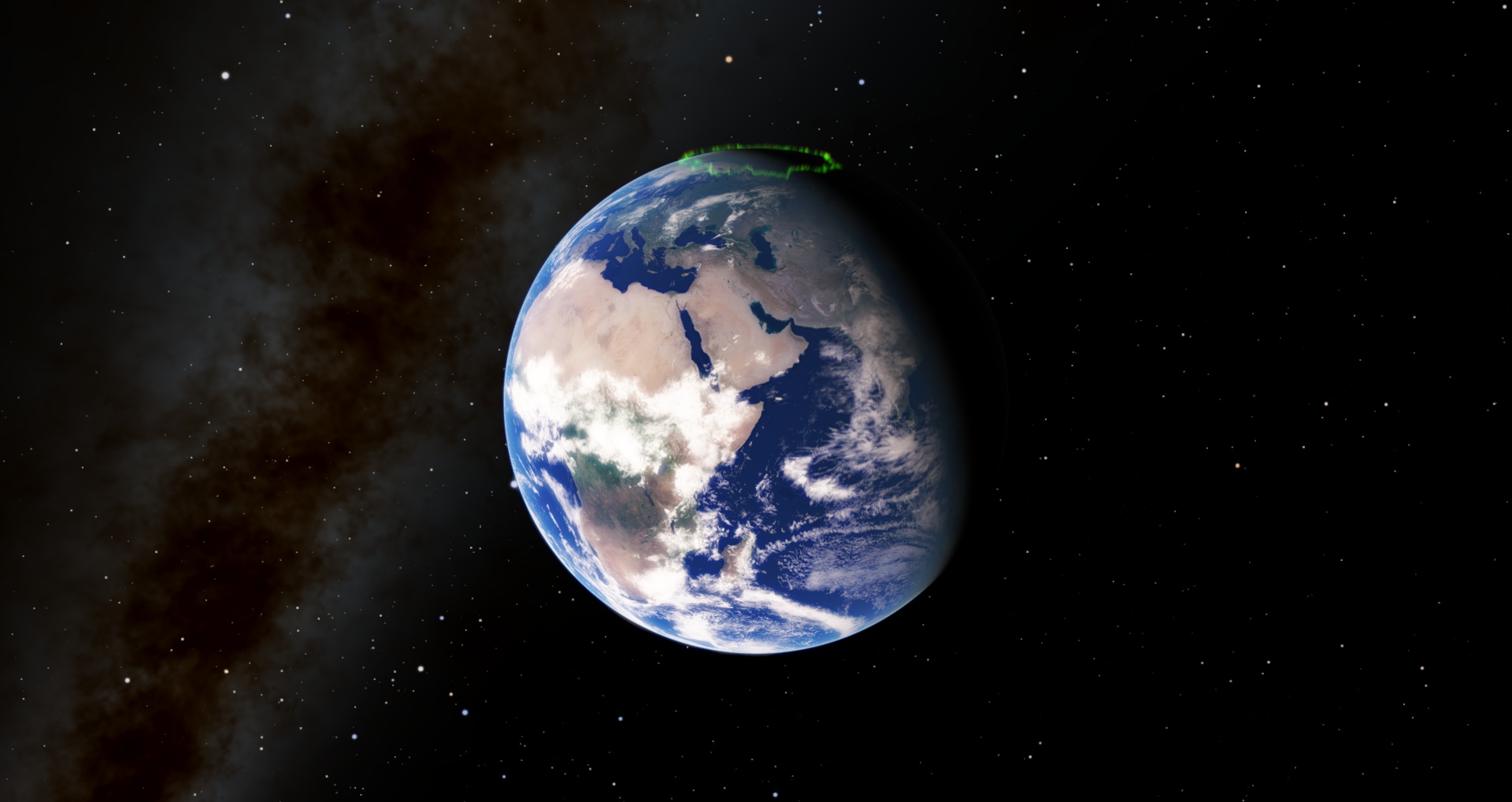

 Pirate
 Italy
Italy 
