|
Work progress - 0.9.7.2
|
|
| FastFourierTransform | Date: Saturday, 13.12.2014, 12:19 | Message # 976 |
 Pioneer
Group: Local Moderators
 Spain
Spain
Messages: 542
Status: Offline
| SolarLiner
http://en.spaceengine.org/forum/22-1040-46381-16-1418211151
|
| |
| |
| SolarLiner | Date: Saturday, 13.12.2014, 12:53 | Message # 977 |
 Explorer
Group: Users
 France
Messages: 267
Status: Offline
| Whoops, should have used the search function 
Thanks FastFourierTransform !
custom landing page to share: http://bit.ly/spaceengine
|
| |
| |
| Orcinus | Date: Saturday, 13.12.2014, 15:58 | Message # 978 |
|
Observer
Group: Newbies
 Germany
Messages: 9
Status: Offline
| I would prefer a small download size but with optional high res textures.
|
| |
| |
| JoeCapricorn | Date: Saturday, 13.12.2014, 20:41 | Message # 979 |
|
Observer
Group: Users
 United States
Messages: 14
Status: Offline
| Maybe 8 or 16k as default with 128k as an optional add-on for sure.
It would be great if 128k resolution were available with the Moon, Mars, Mercury, Enceladus, Vesta, Ceres (after Dawn visit), Titan (if enough information was gathered), Venus and any other world that was mapped in such detail.
|
| |
| |
| Orcinus | Date: Saturday, 13.12.2014, 22:24 | Message # 980 |
|
Observer
Group: Newbies
Germany
Messages: 9
Status: Offline
| Which glass colors will be possible in the anaglyph mode?
|
| |
| |
| SpaceEngineer | Date: Saturday, 13.12.2014, 22:39 | Message # 981 |
 Author of Space Engine
Group: Administrators
 Russian Federation
Messages: 4800
Status: Offline
| Quote JoeCapricorn (  ) It would be great if 128k resolution were available with the Moon, Mars, Mercury, Enceladus, Vesta, Ceres (after Dawn visit), Titan (if enough information was gathered), Venus and any other world that was mapped in such detail.
Only Earth and Moon have such detail now. Probably Mars too, but I have only 64k maps for it.
Quote Orcinus ( ) Which glass colors will be possible in the anaglyph mode?
Any.

|
| |
| |
| SpaceEngineer | Date: Saturday, 13.12.2014, 22:40 | Message # 982 |
|
Author of Space Engine
Group: Administrators
Russian Federation
Messages: 4800
Status: Offline
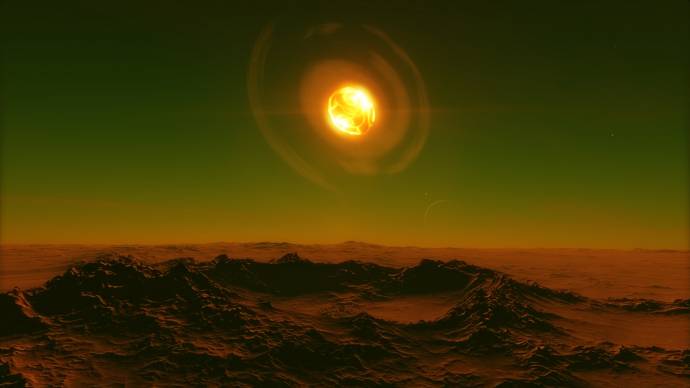
| OMG even I was impressed by this view, accidentally turning camera toward the red giant sun while debugging something.
|
| |
| |
| Karakurt | Date: Saturday, 13.12.2014, 22:50 | Message # 983 |
|
Space Tourist
Group: Users
France
Messages: 20
Status: Offline
| That is indeed a beautiful picture.
A question came to my mind though: will mountain / crater shadows be rendered or casted by light source?
Edited by Karakurt - Saturday, 13.12.2014, 22:51 |
| |
| |
| DeathStar | Date: Sunday, 14.12.2014, 00:05 | Message # 984 |
|
Pioneer
Group: Users
 Croatia
Messages: 515
Status: Offline
| You've gotta love the new stellar coronae. The giants are now especially imposing.
Edited by DeathStar - Sunday, 14.12.2014, 00:05 |
| |
| |
| Inarius | Date: Sunday, 14.12.2014, 00:16 | Message # 985 |
 Explorer
Group: Local Moderators
France
Messages: 237
Status: Offline
| The light seems particularly realistic (well, even if I have never been to a planet with a greenish atmosphere, and a giant red).
|
| |
| |
| Sanocon | Date: Sunday, 14.12.2014, 08:22 | Message # 986 |
 Space Tourist
Group: Users
United States
Messages: 33
Status: Offline
| Quote Karakurt ( ) A question came to my mind though: will mountain / crater shadows be rendered or casted by light source?
If I read correctly from other posts shadow maps will be an upcoming feature but it will take a bit
|
| |
| |
| Game | Date: Sunday, 14.12.2014, 18:42 | Message # 987 |
|
Space Tourist
Group: Users
 Netherlands
Messages: 22
Status: Offline
| Wow. I knew the stars were getting updated, but I didn't realize that it would include the giant stars as well. It looks really pretty.
|
| |
| |
| PlutonianEmpire | Date: Sunday, 14.12.2014, 23:47 | Message # 988 |
 Pioneer
Group: Users
United States
Messages: 475
Status: Offline
| Yeah, when I first saw how post-MS giants are done in SE, I couldn't help but be amused how some of them kinda look a bit like caramel popcorn, especially the K-class giants, albeit with inverse lightness gradient.
Specs: Dell Inspiron 5547 (Laptop); 8 gigabytes of RAM; Processor: Intel® Core™ i5-4210U CPU @ 1.70GHz (4 CPUs), ~2.4GHz; Operating System: Windows 7 Home Premium 64-bit; Graphics: Intel® HD Graphics 4400 (That's all there is :( )
|
| |
| |
| SpaceEngineer | Date: Monday, 15.12.2014, 20:41 | Message # 989 |
|
Author of Space Engine
Group: Administrators
Russian Federation
Messages: 4800
Status: Offline
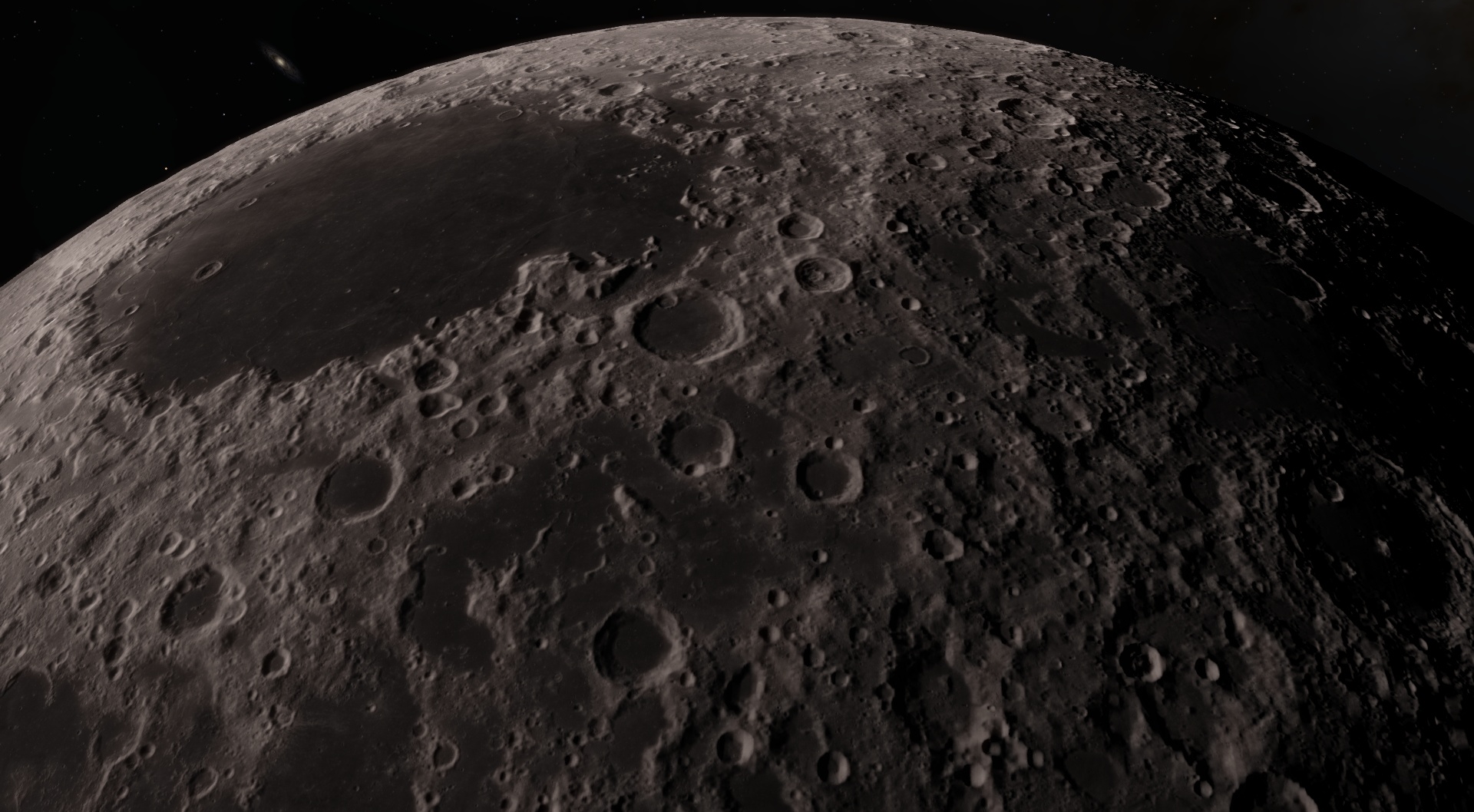
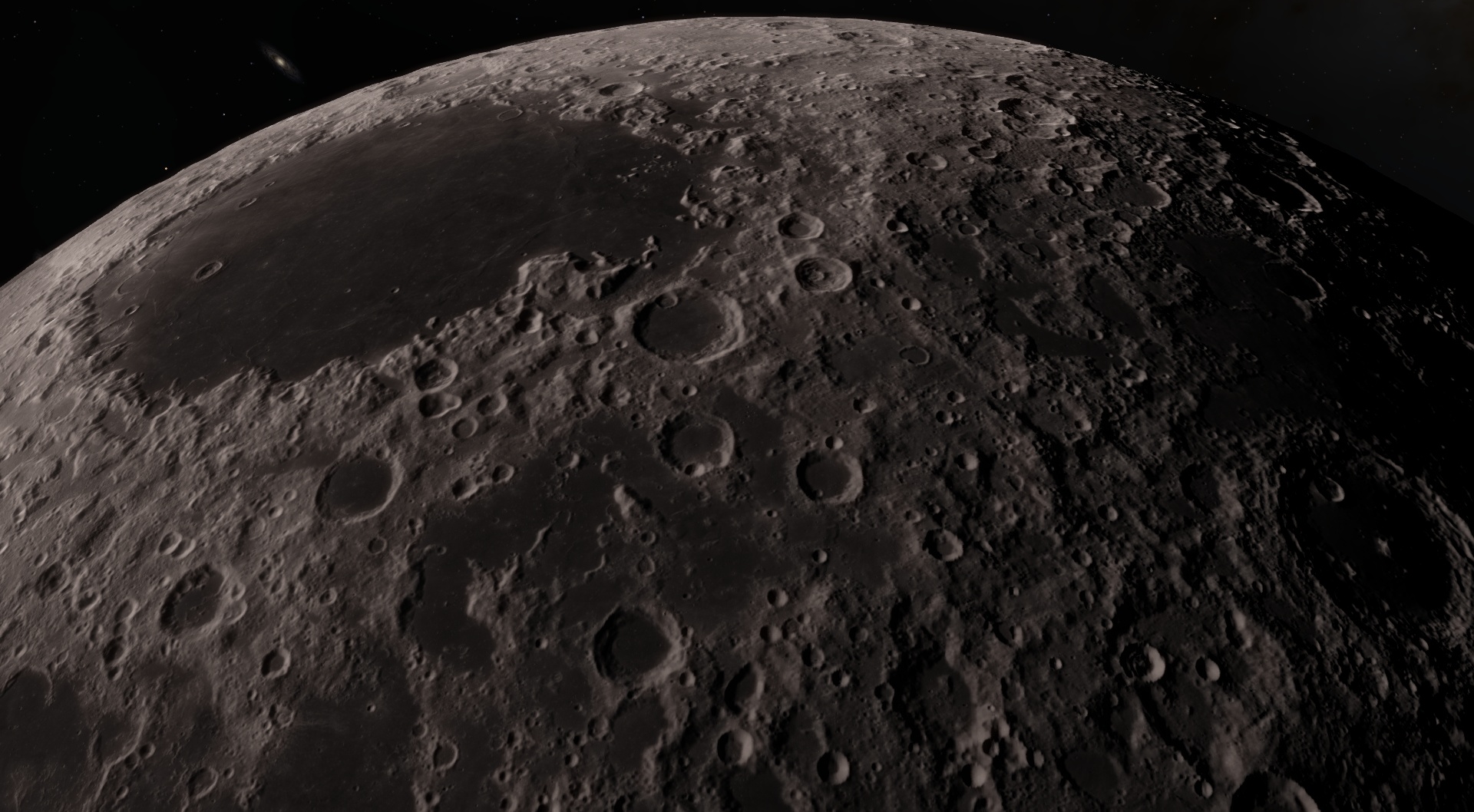
| As you can mention, I working on texture packs. Today I made an extremely huge 256k elevation map for the Moon. Some numbers:
Original LOLA LDEM model have 16 files of total size of 31.6 Gb
Merged into a single cylindrical projection map of resolution 184320 x 92160, 16 bit graysacle (also 31.6 Gb)
Used upgraded Glue 1.05 utility (I will upload it and CubeMap 1.05 soon)
CubeMap worked during 9.5 hours, produced 524286 PNG tiles of 258 x 258 resolution of total size of 22.3 Gb
I didn't pack them into pak files yet, but this may take many hours even on my 12-core CPU.
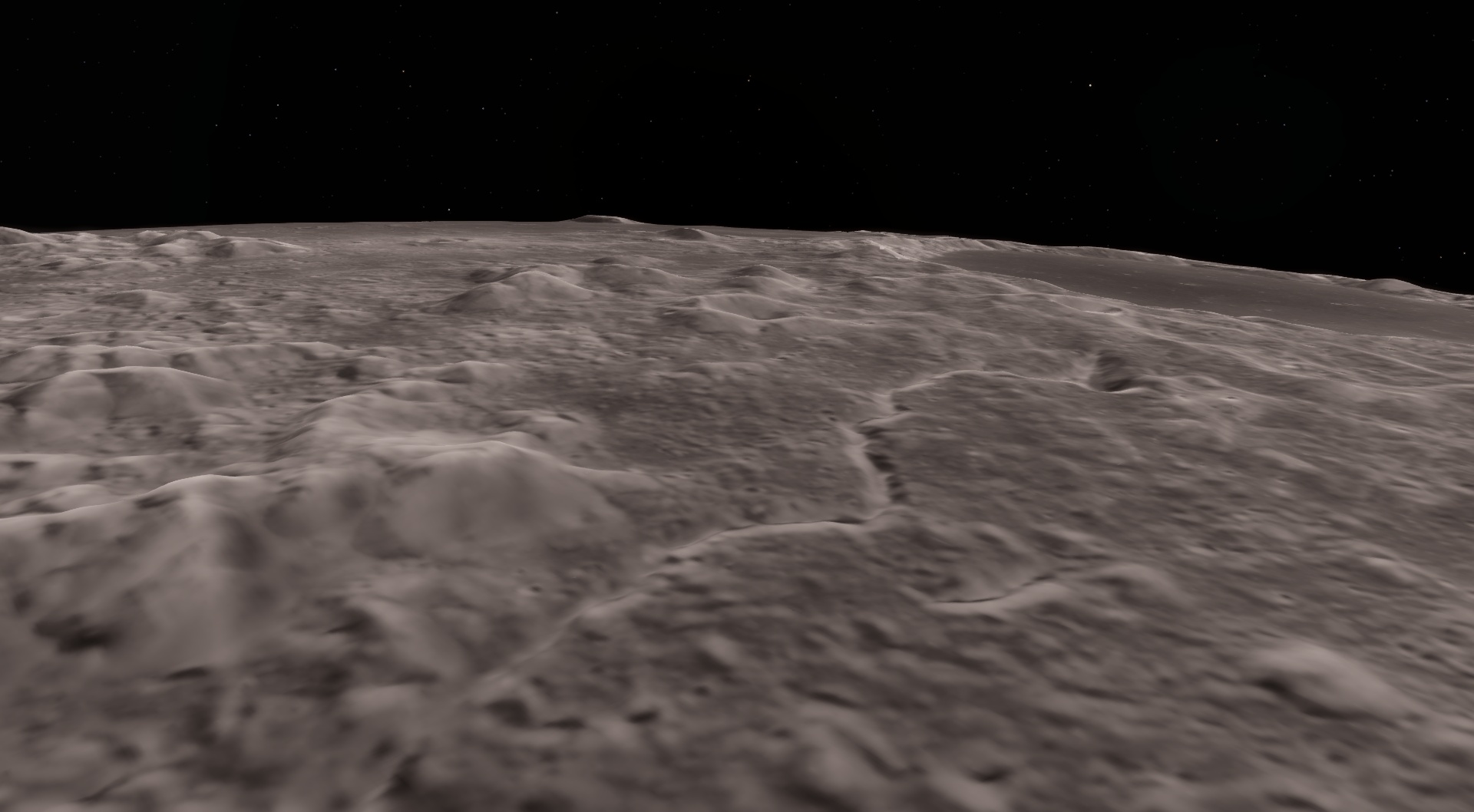
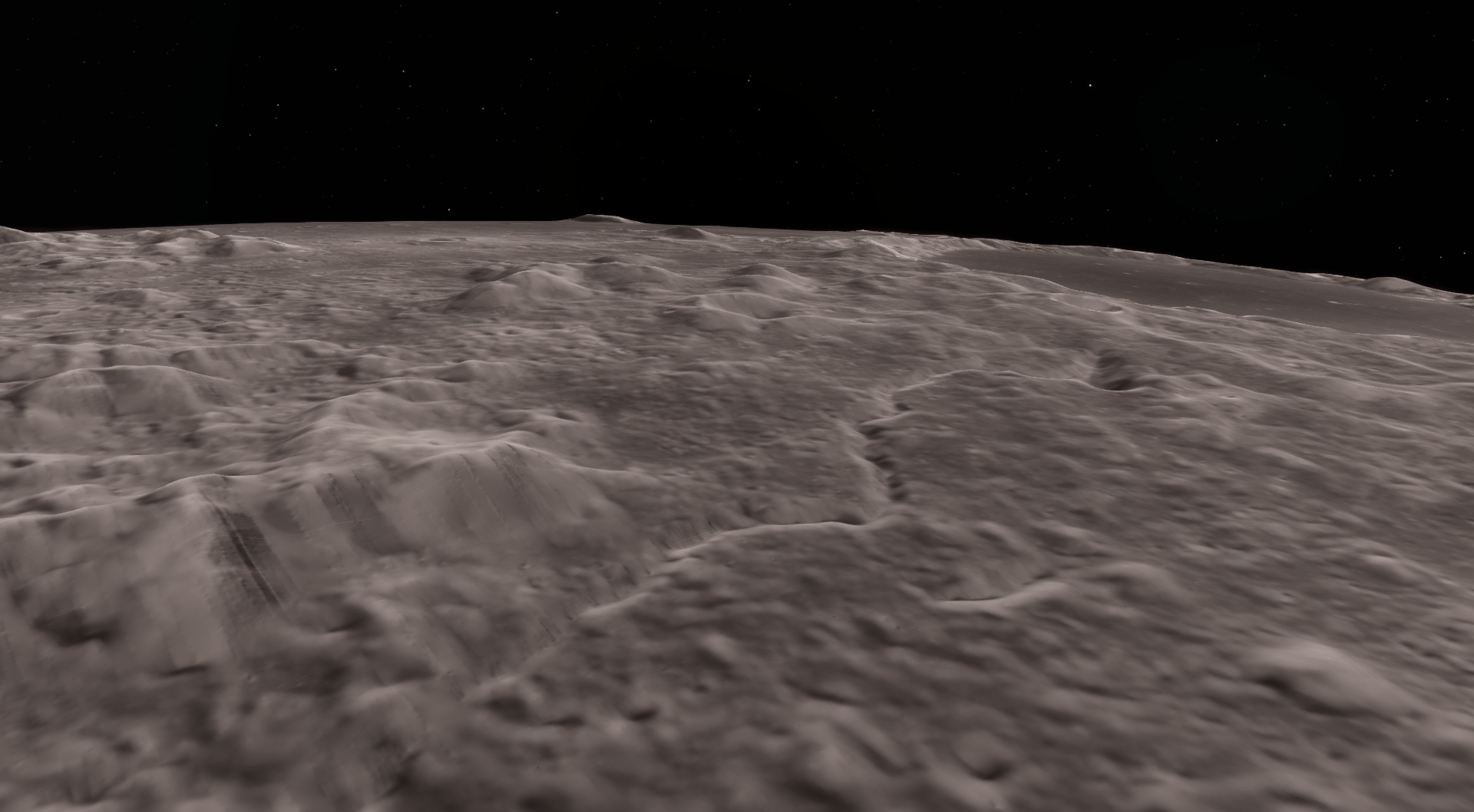
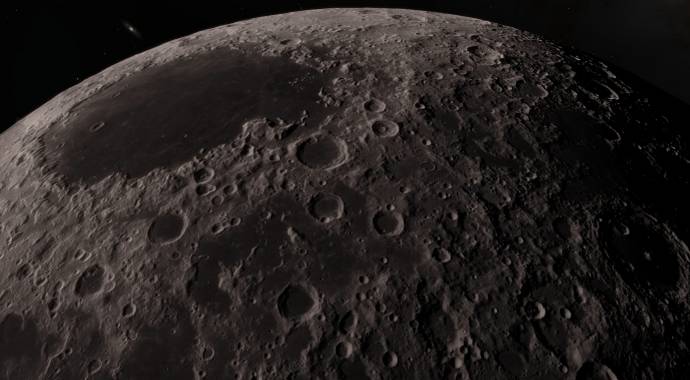
Now the bad news. Look at screenshots comparing the old 64k map used in 0.971 and this new 256k map. Space view is noticeably better:
64k
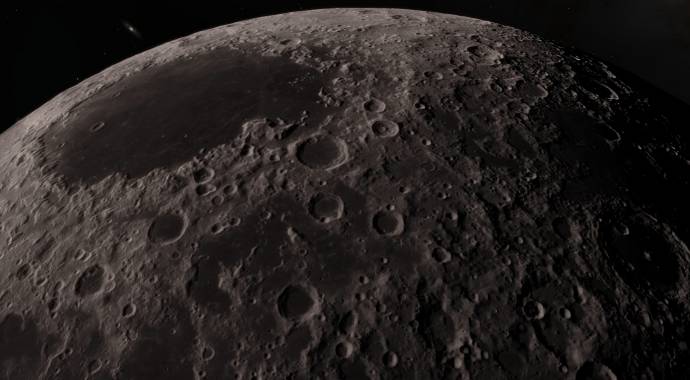
256k
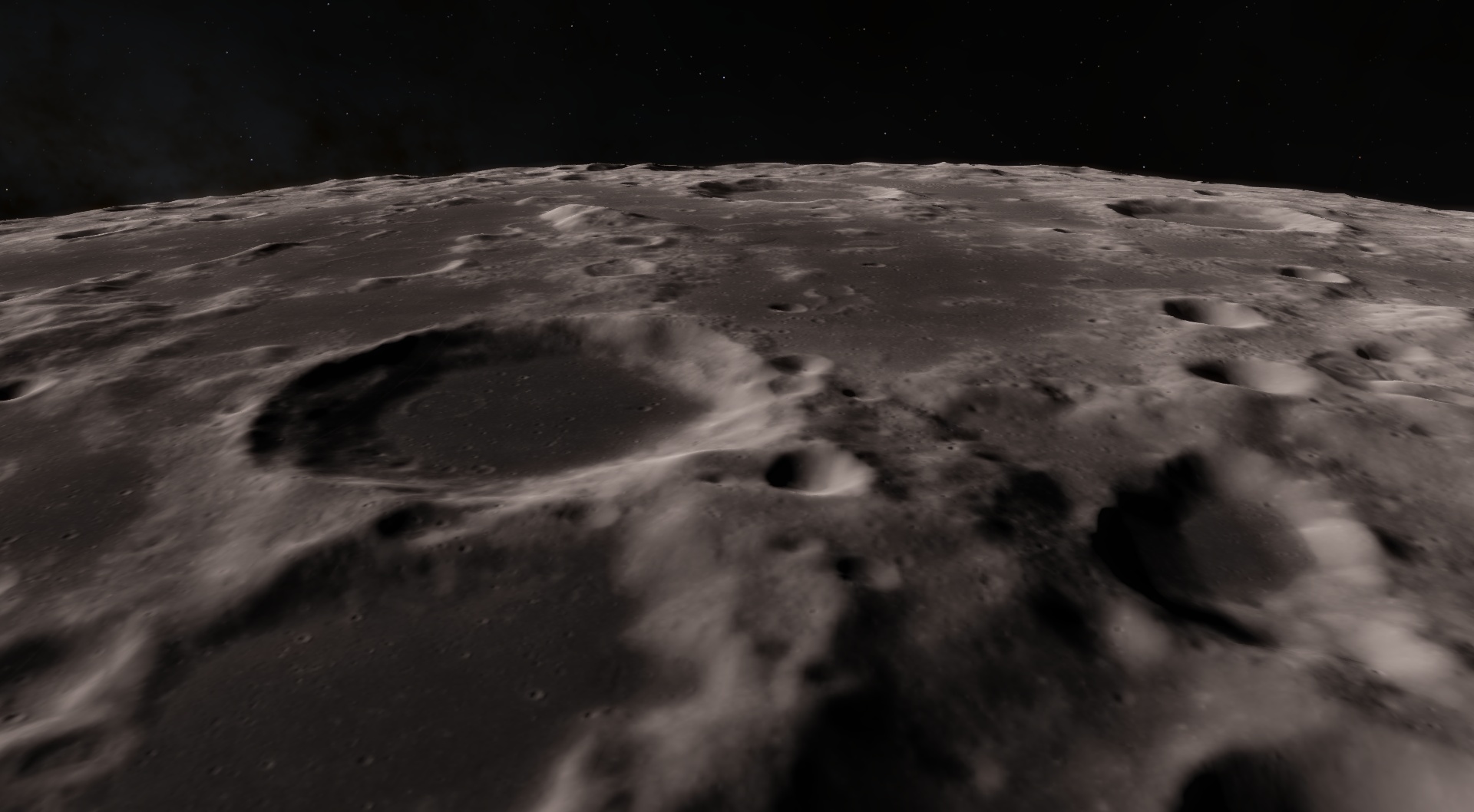
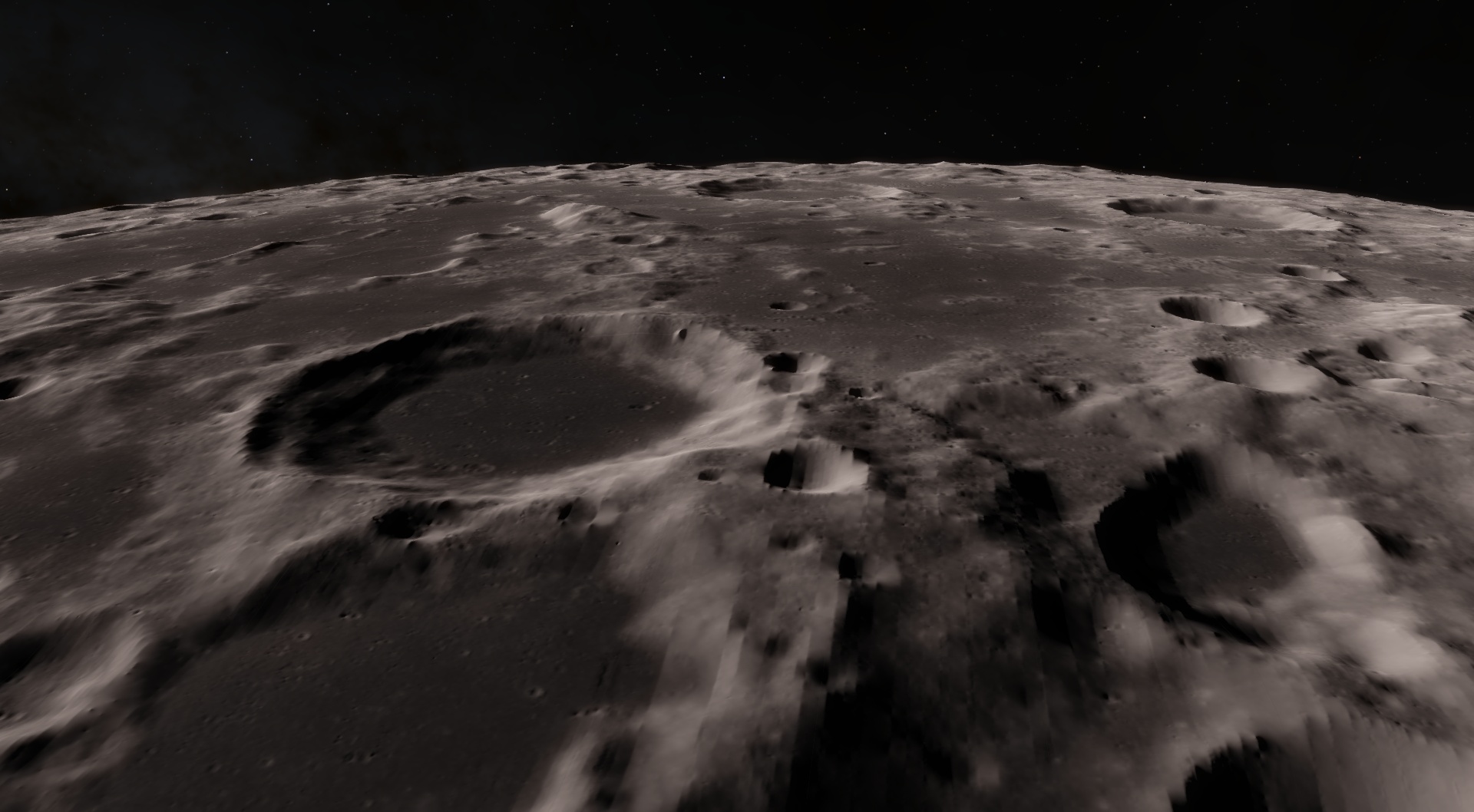
But as we go closer to surface, artefacts became visible:
64k
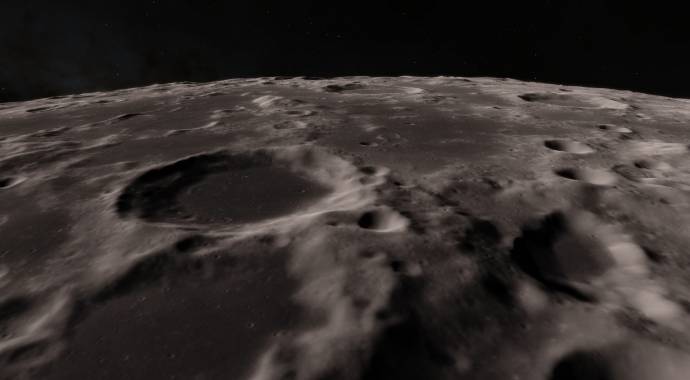
256k
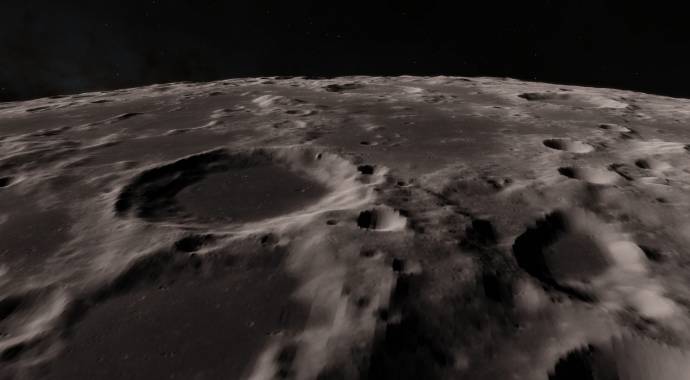
However narrow features rendered better, despite on artifacts:
64k
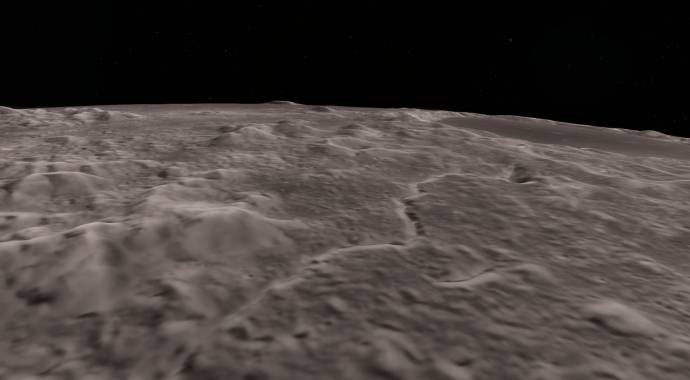
256k
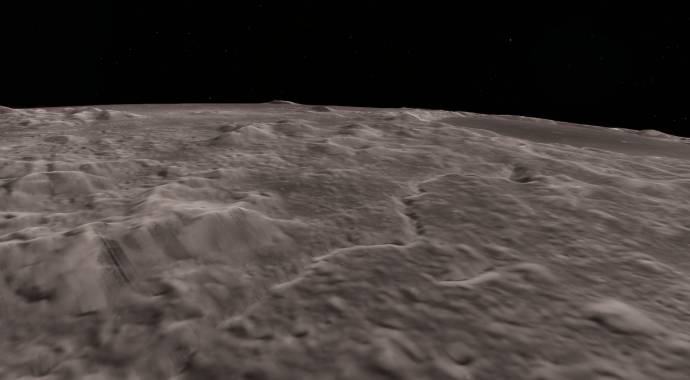
So, in my opinion, old 64k map is better. It was produced from the LOLA LDEM map too, but from a single with lower resolution. It seems that lower resolution 64k map is filtered 265k one (more precisely, LDEM 1024 (1024 pixels per degree) - the better resolution map available on the LRO mission website). I think the 64k map would still be default in 0.972.
|
| |
| |
| Inarius | Date: Monday, 15.12.2014, 23:14 | Message # 990 |
|
Explorer
Group: Local Moderators
France
Messages: 237
Status: Offline
| I agree.
|
| |
| |
 ENG
ENG New site


 Spain
Spain 


 France

 Germany
  United States
 Russian Federation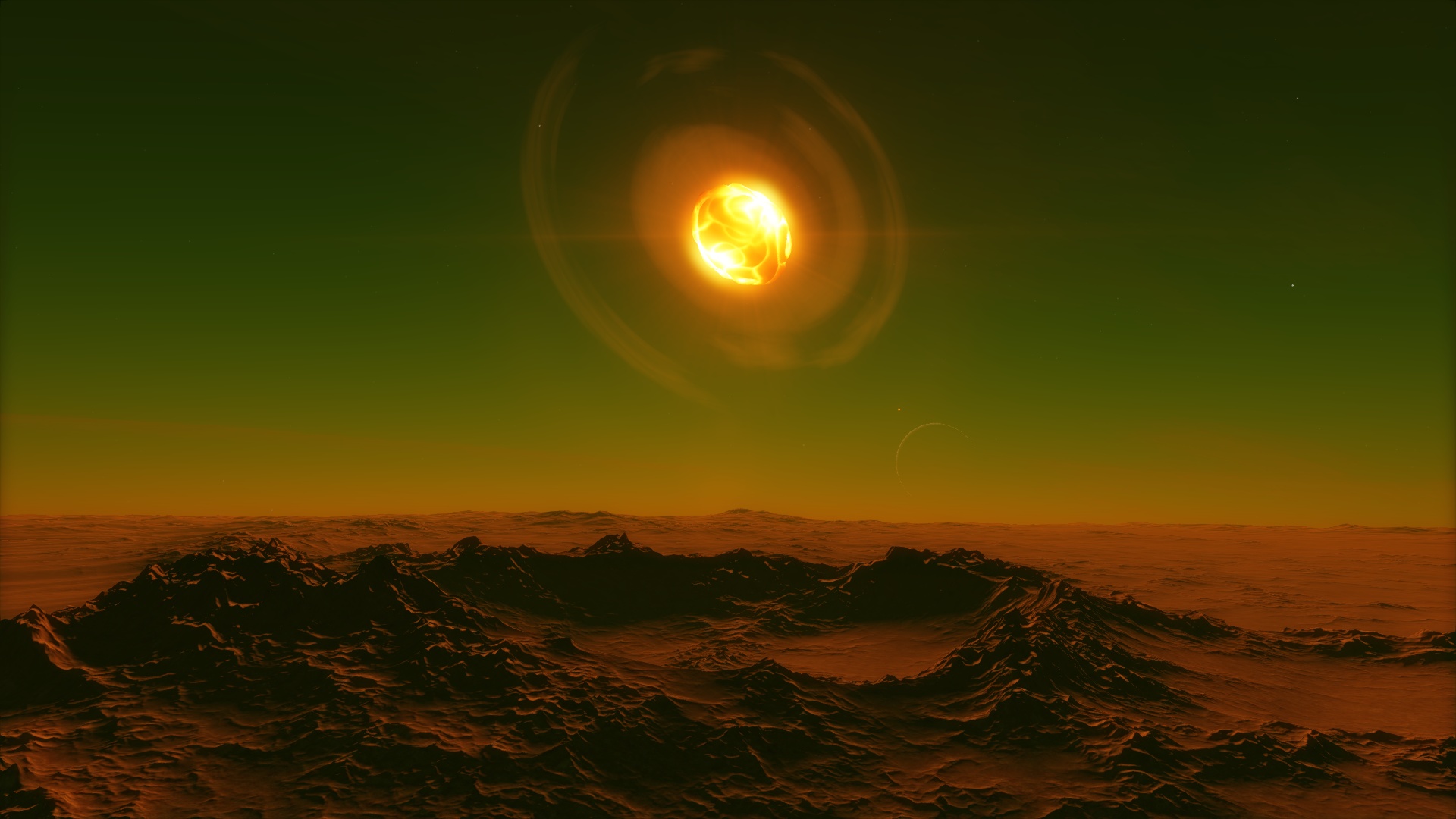
 Croatia
  Netherlands