|
Work progress - 0.9.7.2
|
|
| Sanocon | Date: Thursday, 25.09.2014, 06:59 | Message # 541 |
 Space Tourist
Group: Users
 United States
Messages: 33
Status: Offline
| Quote SpaceEngineer (  ) I may release 0.972 right now if you wish, but it will be full of bugs and partially-finished features. Do you want random glitches and crashes all the time? I guess no.
Got that right. And trust me I've seen/played many games that glitched and crashed. (cough cough Sonic 06 cough cough) bugs and glitches and crashing are not fun, I've learned from experience while learning programming.
|
| |
| |
| Stargate38 | Date: Thursday, 25.09.2014, 15:13 | Message # 542 |
|
Astronaut
Group: Users
United States
Messages: 58
Status: Offline
| @Handbanana: Thanks. I looked him up and that's the 48th image. Anyways, let's get back on topic.
Maybe you could program in a "precession" variable that would be procedurally generated for each planet/moon's orbit. It would be in arcseconds/century and would vary from as little as 0.001 to as much as 36000 (if it's a circumbinary planet orbiting retrograde on an eccentric orbit). Kepler-413b's orbit wouldn't be accurate without it. It precesses over a period of 11 years.
Also, I haven't seen any procedural planets with eccentricity>0.6, even though I scanned over 100 systems. I even checked the dwarf planets that occasionly orbit black holes in galactic centers, but they always have near-circular orbits.
Edited by Stargate38 - Thursday, 25.09.2014, 18:46 |
| |
| |
| Donatelo200 | Date: Friday, 26.09.2014, 02:04 | Message # 543 |
|
Explorer
Group: Users
United States
Messages: 261
Status: Offline
| I think highly eccentric planets were temporarily removed until crossing orbits could be checked for. It likely resulted from me discovering this.
CPU: Intel Core i7-4790K
GPU: Nvidia GTX 1080
SSD: Samsung 850 Evo 250GB
HDD: Toshiba DT01ACA200 2TB
HDD: WD Blue 1TB (2012)
RAM: Unknown 16G-D3-1600-MR 2x8GB
MBD: MSI Z97S SLI Krait Edition (MS-7922)
|
| |
| |
| SpaceEngineer | Date: Friday, 26.09.2014, 23:04 | Message # 544 |
 Author of Space Engine
Group: Administrators
 Russian Federation
Messages: 4800
Status: Offline
| I upgraded SE script engine. Now it can load all planets/asteroids/comets catalogs within few seconds (up to several minutes was needed before). This means that now we may seriously consider making a real SDSS+2df catalog of galaxies:

This is not "real" catalog because it have only 3D coordinates of galaxies (RA, Dec, Dist), but it didn't have data about their class or magnitude. I'm not sure if classification was made for SDSS catalog, but at least magnitudes and color must be there.
*

|
| |
| |
| Inarius | Date: Friday, 26.09.2014, 23:09 | Message # 545 |
 Explorer
Group: Local Moderators
 France
Messages: 237
Status: Offline
| It's a real upgrade then, good work !
|
| |
| |
| second-ich | Date: Saturday, 27.09.2014, 12:03 | Message # 546 |
 Space Pilot
Group: Users
 Germany
Messages: 87
Status: Offline
| Can someone explain to me what a SDSS+2df is ?
|
| |
| |
| HarbingerDawn | Date: Saturday, 27.09.2014, 13:40 | Message # 547 |
 Cosmic Curator
Group: Administrators
United States
Messages: 8717
Status: Offline
| Quote second-ich ( ) Can someone explain to me what a SDSS+2df is ?
https://en.wikipedia.org/wiki/Sloan_Digital_Sky_Survey
https://en.wikipedia.org/wiki/2dF_Galaxy_Redshift_Survey
All forum users, please read this!
My SE mods and addons
Phenom II X6 1090T 3.2 GHz, 16 GB DDR3 RAM, GTX 970 3584 MB VRAM
|
| |
| |
| Sanocon | Date: Sunday, 28.09.2014, 08:19 | Message # 548 |
|
Space Tourist
Group: Users
United States
Messages: 33
Status: Offline
| Quote SpaceEngineer ( ) I upgraded SE script engine. Now it can load all planets/asteroids/comets catalogs within few seconds (up to several minutes was needed before). This means that now we may seriously consider making a real SDSS+2df catalog of galaxies:
That is impressive. Although what would be the amount of Hard Drive space for the SDSS+2df galaxy location coordinates within the catalog, about 0.5-1 GB of data? Just wondering.
|
| |
| |
| SpaceEngineer | Date: Sunday, 28.09.2014, 10:17 | Message # 549 |
|
Author of Space Engine
Group: Administrators
Russian Federation
Messages: 4800
Status: Offline
| 300,000 galaxies are only 30 Mb in text (not binary) catalog.
|
| |
| |
| Gondor2222 | Date: Sunday, 28.09.2014, 10:23 | Message # 550 |
|
Space Pilot
Group: Users
United States
Messages: 92
Status: Offline
| Quote Sanocon ( ) That is impressive. Although what would be the amount of Hard Drive space for the SDSS+2df galaxy location coordinates within the catalog, about 0.5-1 GB of data? Just wondering.
Currently, the galaxies.sc file would take about 85 bytes to store each galaxy's name (in a format like "SDSS-208273082"), RA, Dec, and Distance, including spaces and line breaks.
Example:
To do this for the approximately 500 million galaxies in SSDS, this would require 40 000 000 000 bytes = 40 GB. It would take more if you wanted to include magnitudes and colors.
With some sort of compressed file, with just a number ID, RA, Dec, and Dist in binary, you could probably get it in much less space though.
Edited by Gondor2222 - Sunday, 28.09.2014, 10:24 |
| |
| |
| therealprincebowserkoopaj | Date: Sunday, 28.09.2014, 17:08 | Message # 551 |
|
Observer
Group: Users
 Pirate
Messages: 18
Status: Offline
| Quote DJKiran ( ) Maybe you could implement this technology to make your worlds more interesting, maybe with structures on them, without being too taxing on the processor -
this would be cool but then again he would need data from laser scans of the entire earth to do that then he can't even do that with alien worlds unless you dint mean that technology exactly thats not really possibleAdded (28.09.2014, 16:02)
---------------------------------------------
Quote DoctorOfSpace ( ) The Drake equation isn't really an actual equation with known variables though. All the values for (intelligent) life are completely unknown so anything put is just guessing.
well there should at least be city lights on bloop because it is known that there is an intelligent civilization aka the name of the planet is "bloop" and unless we named it that something else must have named itAdded (28.09.2014, 16:08)
---------------------------------------------
Quote SpaceEngineer ( ) City lights are disabled at the daytime:
what i have been waiting for! thanks space engineer now all we need is alien city lights take your time I'm not rushing that is if you want to do it
|
| |
| |
| DoctorOfSpace | Date: Sunday, 28.09.2014, 17:23 | Message # 552 |
 Galaxy Architect
Group: Global Moderators
Pirate
Messages: 3600
Status: Offline
| Quote therealprincebowserkoopaj ( ) well there should at least be city lights on bloop because it is known that there is an intelligent civilization aka the name of the planet is "bloop" and unless we named it that something else must have named it
Bloop isn't a real planet. It is entirely made up, so it doesn't "need" lights. Lights on alien worlds would be cool to see, but they aren't as important as other things.
Intel Core i7-5820K 4.2GHz 6-Core Processor
G.Skill Ripjaws V Series 32GB (4 x 8GB) DDR4-2400 Memory
EVGA GTX 980 Ti SC 6GB
|
| |
| |
| therealprincebowserkoopaj | Date: Sunday, 28.09.2014, 18:23 | Message # 553 |
|
Observer
Group: Users
Pirate
Messages: 18
Status: Offline
| Quote DoctorOfSpace ( ) Bloop isn't a real planet. It is entirely made up, so it doesn't "need" lights. Lights on alien worlds would be cool to see, but they aren't as important as other things.
well yes and i guess it isn't as important as the main feature being developed but technically speaking it can also be unrealistic not have alien intelligence beyond earth as it must be able to happen elsewhere in the universe like life but you are right having alien civilizations isn't an important feature unlike on earth where it is important to have city light because we live there and its for realism but I'm just saying is allAdded (28.09.2014, 17:23)
---------------------------------------------
i guess the answer would be similar if bioluminescence is added to put it on pandora since in the movie it does have bioluminescence
|
| |
| |
| SolarLiner | Date: Sunday, 28.09.2014, 18:54 | Message # 554 |
 Explorer
Group: Users
France
Messages: 267
Status: Offline
| Quote FastFourierTransform ( ) Amazing amount of information. That excluding stellar conposition and total velocity vector (future versions of SE where stars move).
Adding WISE brown dwarfs catalogue and, asteroid, comets, and quasars to the final SE catalogue would make it around 26 GB.
The astronomical amount of data (excuse the pun, I had to do it) that can be processed and used is my #1 thought why I think Space Engine should have a way of downloading data on the fly, from star catalogs to planetary data and terrain imagery. Yes it would need good servers, but for some there is no way they're going to download 50+ Gb of data at once (or downloading 10 Gb by data type), but downloading a chunk of 10 Mb is totally acceptable even for small bandwidths, and obviously all downloaded data would be cached and downloadable separately.
A good working example would be TerraSync from FlightGear. All data is stored server side, and TerraSync runs on the background, downloading data as you fly, cache your starting location and your flight path, if you made one. Chunks in themselves are not heavy (5 Mb), and covers a 10 km² area. They can be downloaded by TerraDownload, by individual chunks, by areas that you selected, or even the whole Earth at once. And when flying, all data that has been downloaded is stored in the FlightGear scenery, and stays there - until a newer version is detected, and downloaded.
custom landing page to share: http://bit.ly/spaceengine
|
| |
| |
| Qnzi | Date: Monday, 29.09.2014, 09:40 | Message # 555 |
|
Observer
Group: Users
 China
China
Messages: 11
Status: Offline
| Quote SolarLiner ( ) The astronomical amount of data (excuse the pun, I had to do it) that can be processed and used is my #1 thought why I think Space Engine should have a way of downloading data on the fly, from star catalogs to planetary data and terrain imagery. Yes it would need good servers, but for some there is no way they're going to download 50+ Gb of data at once (or downloading 10 Gb by data type), but downloading a chunk of 10 Mb is totally acceptable even for small bandwidths, and obviously all downloaded data would be cached and downloadable separately.
that's a good idea, if a free but reliable server is available~~
Quote Gondor2222 ( ) To do this for the approximately 500 million galaxies in SSDS, this would require 40 000 000 000 bytes = 40 GB. It would take more if you wanted to include magnitudes and colors.
I want to know if SE need to put all data into memory at once, or read proper data when we need it?
|
| |
| |
 ENG
ENG New site


 United States


 Russian Federation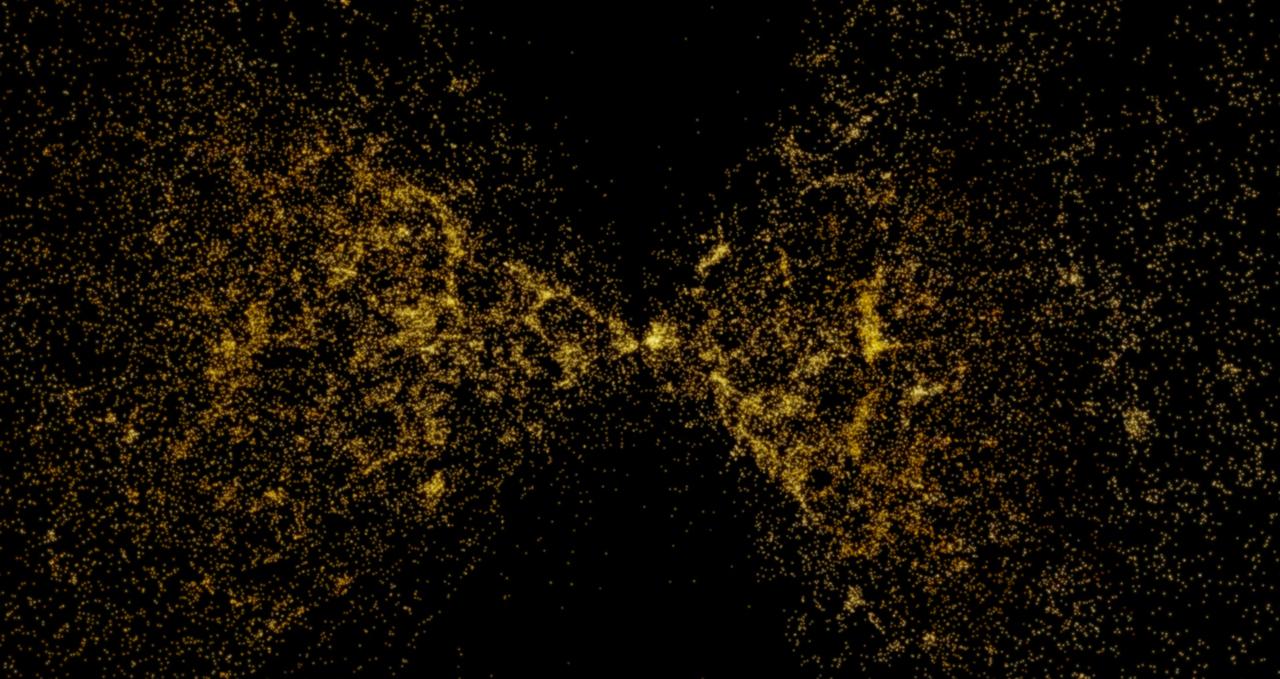

 France
  Germany
  Pirate
 China
China