|
General suggestions
|
|
| JackDole | Date: Thursday, 15.10.2015, 13:22 | Message # 616 |
 Star Engineer
Group: Local Moderators
 Germany
Messages: 1742
Status: Offline
| quarior14,
I found in the English Wikipedia this article about 'tidal locking'
It is there a formula, how long it takes for a body to become tidally locked.
In an old reddit thread I found this question:
'Can the Earth ever become tidally locked to the Sun so one side is always facing inwards (like the Moon)?'
He has more than 200 comments, I have not read them all.
But there was the question; whether a planet can be bound to the sun, when it and its moon are already bound.
I think that's possible. For example, if the orbital period of the moon and the rotation period of the planet, and the orbital period of the planet are the same length. For example, a year.
I have created such a system.
Code
// Noosu.sc
// Tidal locking
// NOt Our SUn
Star "Noosu"
{
RA 0 22 01.59
Dec -71 04 39.01
Dist 4003.23
Class "G2 V"
Luminosity 1
MassSol 1
RadiusSol 1
Age 4.54
}
Code
// Tidal locked planet wit tidal looked moon
// Earth Like BUt Not EArth
// TidalLocked.sc
Planet "Elbunea"
{
ParentBody "Noosu"
Class "Terra"
Mass 1.0
Radius 6378.14
RotationPeriod 8765.8125564
Obliquity 23.4392911
EqAscendNode 180.0
RotationOffset -79.5
Life
{
Class "Organic"
Type "Multicellular"
Biome "Marine/Terrestrial"
}
Atmosphere
{
Height 60
Greenhouse 33
Pressure 1.0
Model "Earth"
Bright 10.0
Opacity 1.0
SkyLight 3.0
EclipseBright 250.0
EclipseColor ( 1.000 0.600 0.200 )
}
Orbit
{
Period 1.0
SemiMajorAxis 1.0
Eccentricity 0.0
Inclination 0.0
AscendingNode 349
LongOfPericen 103
MeanLongitude 100
}
}
Moon "Elbuneas Child"
{
ParentBody "Elbunea"
Class "Selena"
Mass 0.012302
Radius 1737.4
Oblateness 0.002
Surface
{
TidalLocked true
}
Orbit
{
Period 1.0
Eccentricity 0.0549
Inclination 5.15
MeanAnomaly 135.27
AscendingNode 125.08
ArgOfPericen 318.15
RefPlane "Ecliptic"
}
}
Don't forget to look here.

Edited by JackDole - Thursday, 15.10.2015, 13:30 |
| |
| |
| Fireinthehole | Date: Saturday, 24.10.2015, 19:45 | Message # 617 |
 Pioneer
Group: Translators
 Sweden
Messages: 356
Status: Offline
| SpaceEngine has no information about the escape velocity of the body. That would make a great feature.
Love SpaceEngine!
|
| |
| |
| DeathStar | Date: Saturday, 24.10.2015, 19:49 | Message # 618 |
|
Pioneer
Group: Users
 Croatia
Messages: 515
Status: Offline
| Fireinthehole, I think that there is, but it is called first cosmic velocity or something.
|
| |
| |
| Fireinthehole | Date: Saturday, 24.10.2015, 20:08 | Message # 619 |
|
Pioneer
Group: Translators
Sweden
Messages: 356
Status: Offline
| DeathStar, so that's what the cosmic velocity is. Pretty confusing, I don't think that's widely used.
Love SpaceEngine!
|
| |
| |
| Alek | Date: Saturday, 24.10.2015, 23:18 | Message # 620 |
 Pioneer
Group: Users
 United States
Messages: 326
Status: Offline
| A moon and a tidally locked planet can't have the same rotation period and revolution period, for example, if you put our moon in a 1 year orbit, it wouldn't obit Earth, but rather, the Sun, because Earth's Hill Sphere Radius isn't that large.
Living among the stars, I find my way. I grow in strength through knowledge of the space I occupy, until I become the ruler of my own interstellar empire of sorts. Though The world was made for the day, I was made for the night, and thus, the universe itself is within my destiny.
|
| |
| |
| OMGspace_engine | Date: Sunday, 25.10.2015, 00:12 | Message # 621 |
|
Observer
Group: Users
 Brazil
Messages: 19
Status: Offline
| This video has a very good idea of how the planetary rings could look in space engine:
https://youtu.be/zR9KpK1Ua-Q?t=52s
Please, don't stop the development of this amazing game 
Edited by OMGspace_engine - Sunday, 25.10.2015, 00:13 |
| |
| |
| 1984xieqiang1984 | Date: Sunday, 25.10.2015, 11:44 | Message # 622 |
|
Observer
Group: Newbies
 Pirate
Messages: 1
Status: Offline
| I wish SpaceEngine is able to show the connecting lines of constellation just like Google Sky Map,thank you!because i want to identify constellations in the real sky with the help of SpaceEngine,thank you!
Edited by 1984xieqiang1984 - Sunday, 25.10.2015, 11:46 |
| |
| |
| uniderth | Date: Monday, 26.10.2015, 02:19 | Message # 623 |
|
Observer
Group: Newbies
Pirate
Messages: 1
Status: Offline
| I concur with 1984xiegiang1984. SpaceEngine is epic. It has epic features too. But there is one thing missing. That is the ability to create lines. The only function I'm looking for is to select Object A (a set of x,y,z coordinates) and select Object B (a set of x,y,z coordinates) and have a line created between them. Having dealt with 3D programs before, I can't imagine this would be a terribly difficult function to create. It is just two points connected by a line. It doesn't have to be anything fancy either.
Is there any idea on when this function will be available? Maybe SpaceEngine already does and I've just missed it. Are there any other space exploration programs that do have this functionality?
|
| |
| |
| Alek | Date: Monday, 26.10.2015, 03:45 | Message # 624 |
|
Pioneer
Group: Users
United States
Messages: 326
Status: Offline
| Quote uniderth (  ) Are there any other space exploration programs that do have this functionality?
Pretty sure Celestia can, the newest Starry Night is really good with things like that though pretty sure you have to pay for that...
Living among the stars, I find my way. I grow in strength through knowledge of the space I occupy, until I become the ruler of my own interstellar empire of sorts. Though The world was made for the day, I was made for the night, and thus, the universe itself is within my destiny.
|
| |
| |
| quarior14 | Date: Wednesday, 28.10.2015, 09:16 | Message # 625 |
 World Builder
Group: Users
Pirate
Messages: 649
Status: Offline
| In orbit, one could also add the distance from the apogee and also see the remaining time before it reaches its apogee distance and perigee.
Also, two fashion could put "Following," he realistic at the time when it enters a sphere of influence, it is attracted by the celestial body and by the time that comes out of its sphere influence, we follow not the other way would be locked, it's one that for now is that by default.
It also has a weird thing, if we make one planet to an atmospheric pressure of less than 0.0500 atm, there are no procedural cloud off Mars that has a pressure of 0.012 atm at the clouds, you can make clouds this pressure and deserts like Mars, the clouds look like Terra out select activities is decency be like sandstorms and see water vapor.
Example, here is a customized desert but the clouds are procedural but almost looks like Terra.
Finally the system for export, it could export the system catalogs planets (one by default), one of the stars (which system is low) and when the galaxy is located. This may be convenient to locate the RA, Dec and Dist for I see no other way to locate because in the debugging mode where there is the coordinates, I do not see any infomation about that
(excluding soon as the center of the system is selected but if we want where we are now to make a customized system where there is nothing, it is convenient.
If you add the fact that you can put it in the editor mode, or put in a corner in normal mode since there are fewer of something written on the debugging mode.
Speaking of editing mode, it is in progress (this after the debugging mode) ?
Otherwise we could add a incone + and - for creating a system's center or galaxies (or delete if a center of a system's center or galaxie is selected) to a system's center and placing it directly into catalogs/Edit_[number]/stars/Stars_[number].sc (or catalogs/galaxies/Galaxies_[number].sc if it is galaxies) (where number is used with the same principle as captures except that here, the number of edition), which avoids this break the head as shown above to find the coordinates (RA, Dec and Disc). Same principle to the other stars but will select the parent (for the first time, it will be the center of the system), what I think is more convenient than typing the code and save it in catalogs/Edit_[number]/planets/Planets_[number] (if -, it removes the selected celestial body).
In fact, this is supposed to be implemented because I do not see in the current version Animated model of Jupiter and you can do this for all the gas giants and ice giants.
Quarior
Edited by quarior14 - Thursday, 29.10.2015, 09:39 |
| |
| |
| x264fhdbenchmark | Date: Wednesday, 04.11.2015, 19:01 | Message # 626 |
|
Observer
Group: Users
Pirate
Messages: 17
Status: Offline
| Suggestion for simpler units.
for example
Instead of 1000 km (/s) use 1 Mm (/s) -> like in Elite Dangerous
Instead of 1000 c use 1 kc
Also I wouldn't mind if 1c would show up from 300 Mm. Currently ~0.35 c pops up after 100000 km.
Edited by x264fhdbenchmark - Wednesday, 04.11.2015, 19:09 |
| |
| |
| quarior14 | Date: Friday, 06.11.2015, 20:06 | Message # 627 |
|
World Builder
Group: Users
Pirate
Messages: 649
Status: Offline
| You may find me silly but it's going to put the Sealevel for config so that it is increasingly obsolete because it could be used to find out how the ocean covers the planet (0 for 0% and 1 for 100%) because although it does not specify the BumpHeight, BumpOffset and Ocean Height and we put a Sealevel any, it is ignored, I hope this will be handed / resolved. In fact, the Lava tag will soon be implemented ?
Quarior
|
| |
| |
| Tenebristhedarkened | Date: Monday, 09.11.2015, 03:15 | Message # 628 |
|
Space Tourist
Group: Users
United States
Messages: 29
Status: Offline
| Would it be possible to have intergalactic stars? And maybe have stars orbit around their galaxies?
|
| |
| |
| HarbingerDawn | Date: Thursday, 12.11.2015, 14:15 | Message # 629 |
 Cosmic Curator
Group: Administrators
United States
Messages: 8717
Status: Offline
| Quote Vilfate ( ) ⊙means vector into page (from viewer)
⊗means vector out of page (towards viewer)
Vector into screen would be moving forward, vector out of screen would be moving backward, so it is already correct.
All forum users, please read this!
My SE mods and addons
Phenom II X6 1090T 3.2 GHz, 16 GB DDR3 RAM, GTX 970 3584 MB VRAM
Edited by HarbingerDawn - Thursday, 12.11.2015, 14:17 |
| |
| |
| Vilfate | Date: Thursday, 12.11.2015, 23:32 | Message # 630 |
 Astronaut
Group: Users
 China
China
Messages: 49
Status: Offline
| Quote HarbingerDawn ( ) so it is already correct.
Sorry that I've made a horrible typing mistake.
⊗means in and ⊙means out, like what you'll see with a flying arrow

Edited by Vilfate - Thursday, 12.11.2015, 23:34 |
| |
| |
 ENG
ENG New site


 Germany


 Sweden
 Croatia
  United States
 Brazil
 Pirate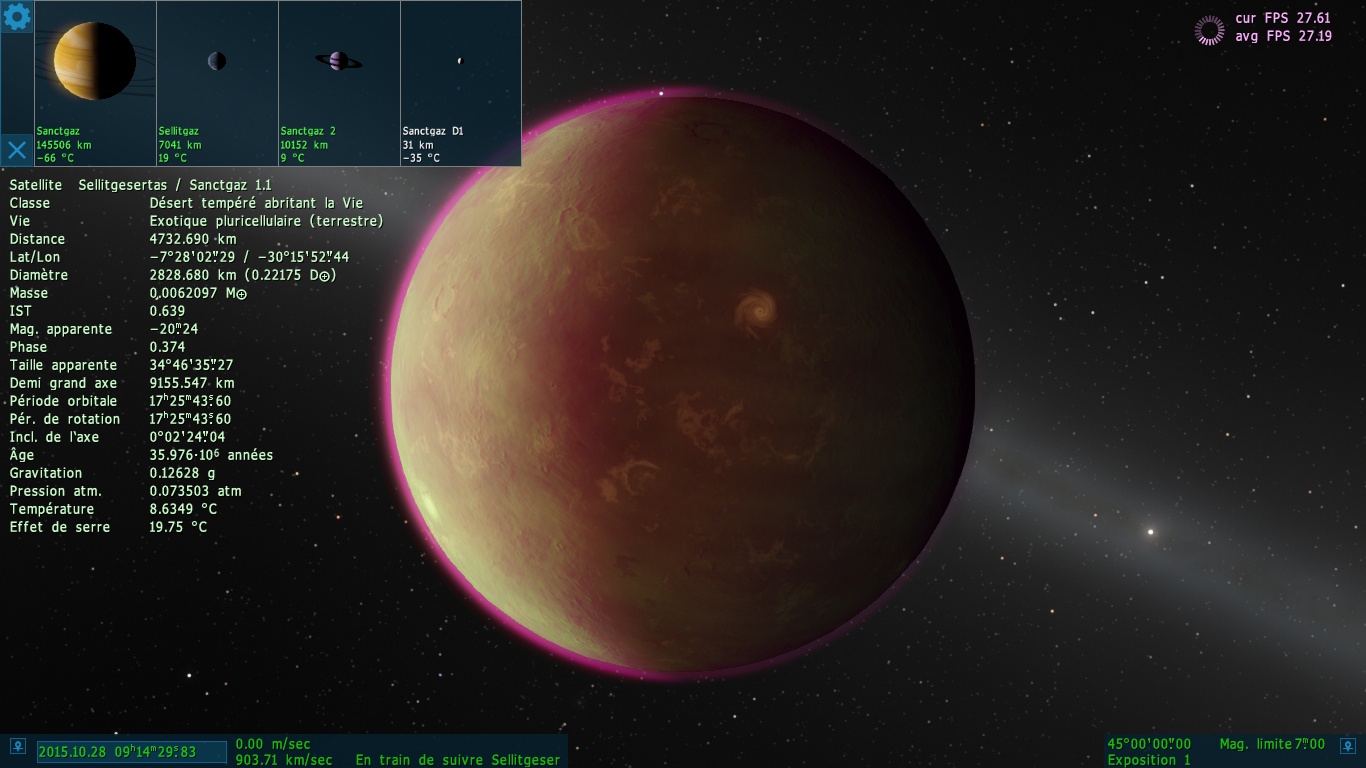


 China
China