|
Astrophotography
|
|
| TemperateTerraIsBest | Date: Saturday, 14.02.2015, 04:27 | Message # 436 |
 Space Tourist
Group: Users
 United States
Messages: 32
Status: Offline
| Weird.. the picture and color wont show. 
Sample Text
Edited by TemperateTerraIsBest - Saturday, 14.02.2015, 04:28 |
| |
| |
| Watsisname | Date: Monday, 16.02.2015, 06:24 | Message # 437 |
 Galaxy Architect
Group: Global Moderators
United States
Messages: 2613
Status: Offline
| Hooray for clear skies again. Here's an unedited shot I grabbed last night:


|
| |
| |
| spacer | Date: Tuesday, 17.02.2015, 16:51 | Message # 438 |
 Star Engineer
Group: Users
 Israel
Messages: 1258
Status: Offline
| This is how you see the sky in naked eye?!
"we began as wanderers, and we are wanderers still"
-carl sagan
-space engine photographer
|
| |
| |
| DeathStar | Date: Tuesday, 17.02.2015, 17:15 | Message # 439 |
|
Pioneer
Group: Users
 Croatia
Messages: 515
Status: Offline
| Quote spacer (  ) This is how you see the sky in naked eye?!
Just because it is unedited does not mean that is how the human eye would see it.
|
| |
| |
| Watsisname | Date: Wednesday, 18.02.2015, 01:12 | Message # 440 |
|
Galaxy Architect
Group: Global Moderators
United States
Messages: 2613
Status: Offline
| Quote spacer ( ) This is how you see the sky in naked eye?!
No, the camera picks up a lot more light than the eye can, especially with a long (this was 20s) exposure. The limiting visual magnitude here is about 6.0, whereas the faintest stars captured in the shot are about magnitude 9. You can also see comet Lovejoy and M33 (barely), which I've never been able to spot with my eyes.
|
| |
| |
| midtskogen | Date: Thursday, 19.02.2015, 20:08 | Message # 441 |
 Star Engineer
Group: Users
 Norway
Messages: 1674
Status: Offline
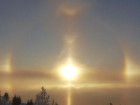
| Last night:

And the night before, another meteor and faint aurora:

NIL DIFFICILE VOLENTI

Edited by midtskogen - Thursday, 19.02.2015, 20:12 |
| |
| |
| Fireinthehole | Date: Friday, 20.02.2015, 14:11 | Message # 442 |
 Pioneer
Group: Translators
 Sweden
Messages: 356
Status: Offline
| Beautiful shot, as always Watsisname! 
Quote spacer ( ) This is how you see the sky in naked eye?!
A dark sky looks far more impressive to the naked eye ;)Quote Watsisname ( ) No, the camera picks up a lot more light than the eye can, especially with a long (this was 20s) exposure. The limiting visual magnitude here is about 6.0, whereas the faintest stars captured in the shot are about magnitude 9. You can also see comet Lovejoy and M33 (barely), which I've never been able to spot with my eyes.
Hm, with a NELM of +6 you should be able to distinguish M33. I did it myself under such conditions, with M33 being about 45 degrees over the horizon. Though averted vision was required.
Love SpaceEngine!
Edited by Fireinthehole - Friday, 20.02.2015, 14:11 |
| |
| |
| Watsisname | Date: Friday, 20.02.2015, 21:12 | Message # 443 |
|
Galaxy Architect
Group: Global Moderators
United States
Messages: 2613
Status: Offline
| Quote Fireinthehole ( ) A dark sky looks far more impressive to the naked eye ;)
Indeed it does. A truly dark sky even gives me an (obviously false) perception of depth to the sky, and I'm always amazed at how it can contain so many stars and yet still be so dark. Good old "Olber's paradox" mathematics for you.
Quote Fireinthehole ( ) Hm, with a NELM of +6 you should be able to distinguish M33. I did it myself under such conditions, with M33 being about 45 degrees over the horizon. Though averted vision was required.
If you could spot it from a flat 6 then I'm impressed. At magnitude 5.7 the contrast between M33 and the background sky is very low (as evident by the long exposure), and so it is a considered a difficult averted vision target. I've never managed it, but I have a very hard time spotting diffuse objects with such low surface brightnesses in general. A half magnitude or more difference makes it a lot easier.
|
| |
| |
| Fireinthehole | Date: Friday, 20.02.2015, 22:58 | Message # 444 |
|
Pioneer
Group: Translators
Sweden
Messages: 356
Status: Offline
| Quote Fireinthehole ( ) Indeed it does. A truly dark sky even gives me an (obviously false) perception of depth to the sky, and I'm always amazed at how it can contain so many stars and yet still be so dark. Good old "Olber's paradox" mathematics for you.
I remember the first time I saw a truly dark sky. The first thing I thought, was that I could not blame those in the middle ages, who believed all the stars were located at the same distance, because that was my impression too!
Quote Watsisname ( ) If you could spot it from a flat 6 then I'm impressed. At magnitude 5.7 the contrast between M33 and the background sky is very low (as evident by the long exposure), and so it is a considered a difficult averted vision target. I've never managed it, but I have a very hard time spotting diffuse objects with such low surface brightnesses in general. A half magnitude or more difference makes it a lot easier.
I saw a star that I know have an apparent magnitude of about +6.1, and I saw M33 with averted vision. Very hard to see though, I was out for about 20 minutes before my eyes had got used to the darkness.
Love SpaceEngine!
Edited by Fireinthehole - Saturday, 21.02.2015, 11:34 |
| |
| |
| SolarLiner | Date: Sunday, 22.02.2015, 12:29 | Message # 445 |
 Explorer
Group: Users
 France
Messages: 267
Status: Offline
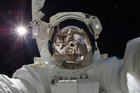
| First capture from a guy on reddit at /r/space, using his new solar telescope. (So not mine unfortunately)

That's hot in all different kinds of ways.
custom landing page to share: http://bit.ly/spaceengine
|
| |
| |
| midtskogen | Date: Sunday, 22.02.2015, 18:18 | Message # 446 |
|
Star Engineer
Group: Users
Norway
Messages: 1674
Status: Offline
| I noticed a red dot next to Venus tonight. It's Mars (had to look it up). That might create a good picture. Has anyone had a go?
NIL DIFFICILE VOLENTI
|
| |
| |
| Watsisname | Date: Monday, 23.02.2015, 05:29 | Message # 447 |
|
Galaxy Architect
Group: Global Moderators
United States
Messages: 2613
Status: Offline
| I got this one the other day when they formed a trio with the Moon. Had some clouds though.

|
| |
| |
|
| FastFourierTransform | Date: Monday, 23.02.2015, 23:08 | Message # 449 |
 Pioneer
Group: Local Moderators
 Spain
Spain
Messages: 542
Status: Offline
| Amazing!
|
| |
| |
| DoctorOfSpace | Date: Monday, 23.02.2015, 23:21 | Message # 450 |
 Galaxy Architect
Group: Global Moderators
 Pirate
Messages: 3600
Status: Offline
| I wish I had a proper response to those images but I am at a loss for words 
Intel Core i7-5820K 4.2GHz 6-Core Processor
G.Skill Ripjaws V Series 32GB (4 x 8GB) DDR4-2400 Memory
EVGA GTX 980 Ti SC 6GB
|
| |
| |
 ENG
ENG New site


 United States


 Israel
  Croatia
  Norway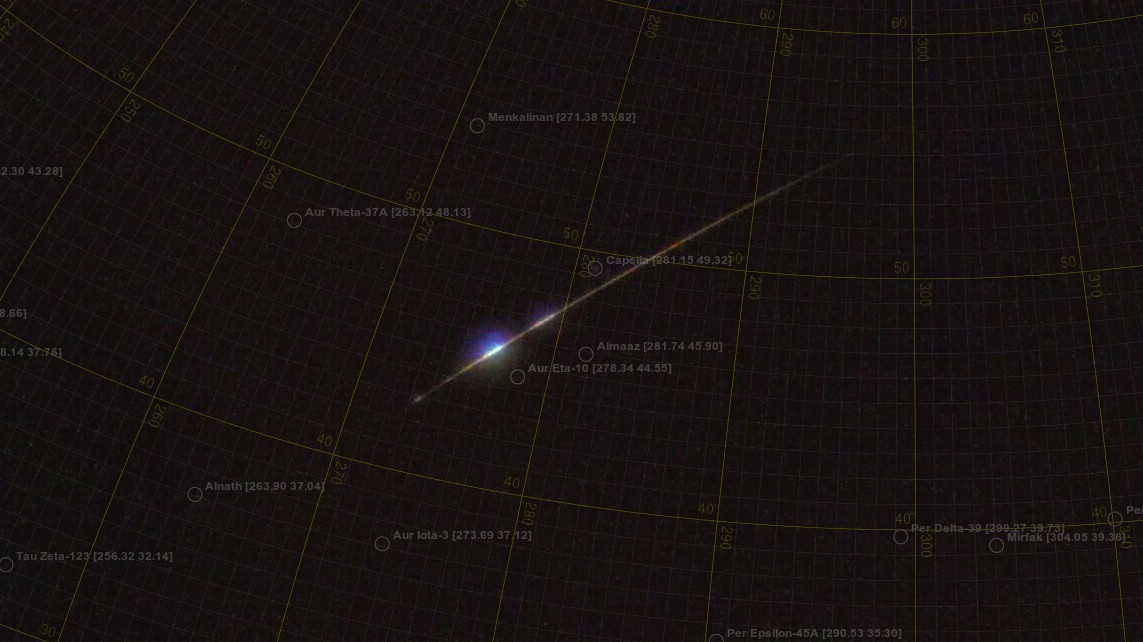

 Sweden
  France


 Spain
Spain  Pirate