|
Astrophotography
|
|
| midtskogen | Date: Wednesday, 05.11.2014, 09:10 | Message # 391 |
 Star Engineer
Group: Users
 Norway
Messages: 1674
Status: Offline
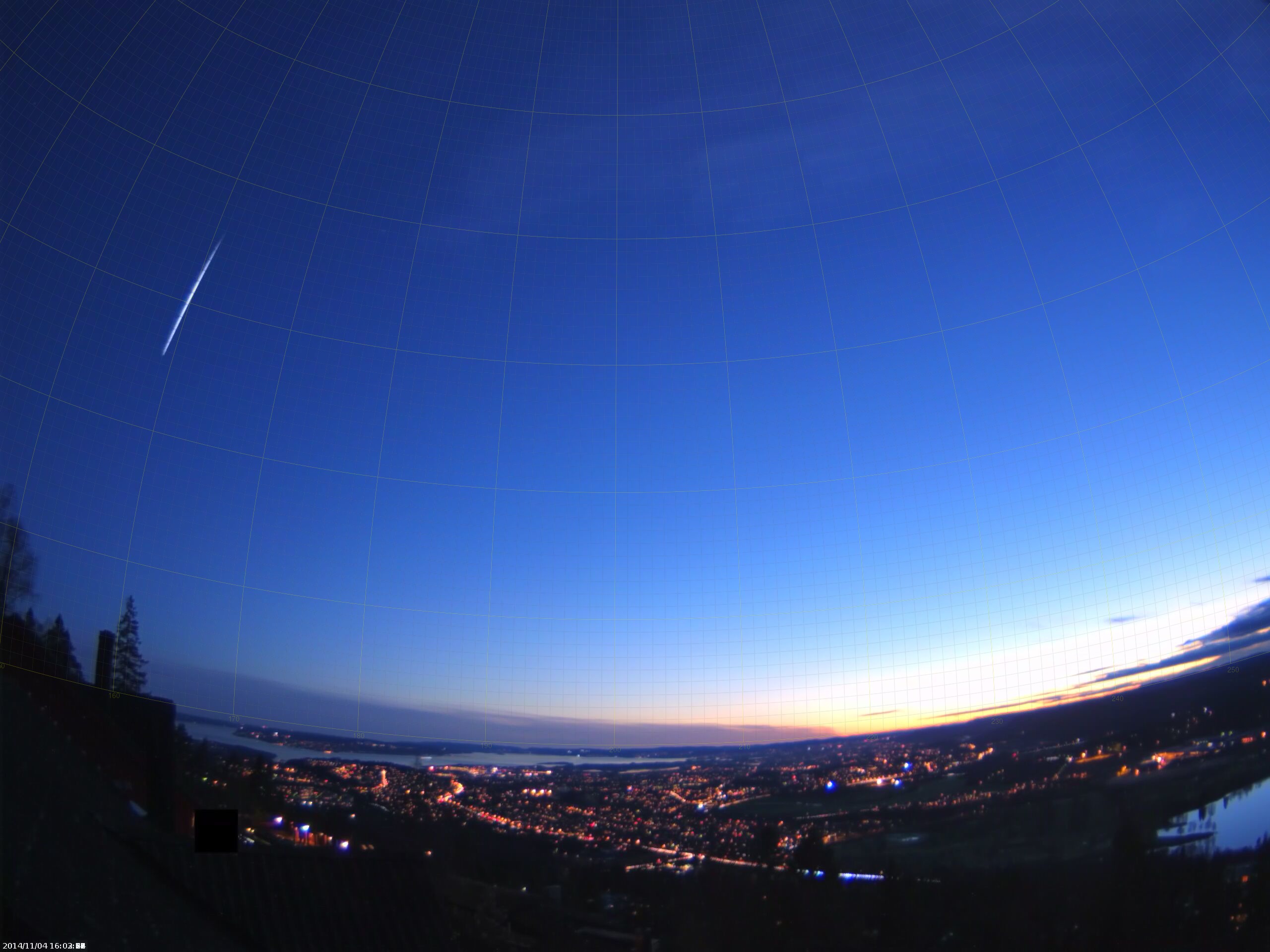
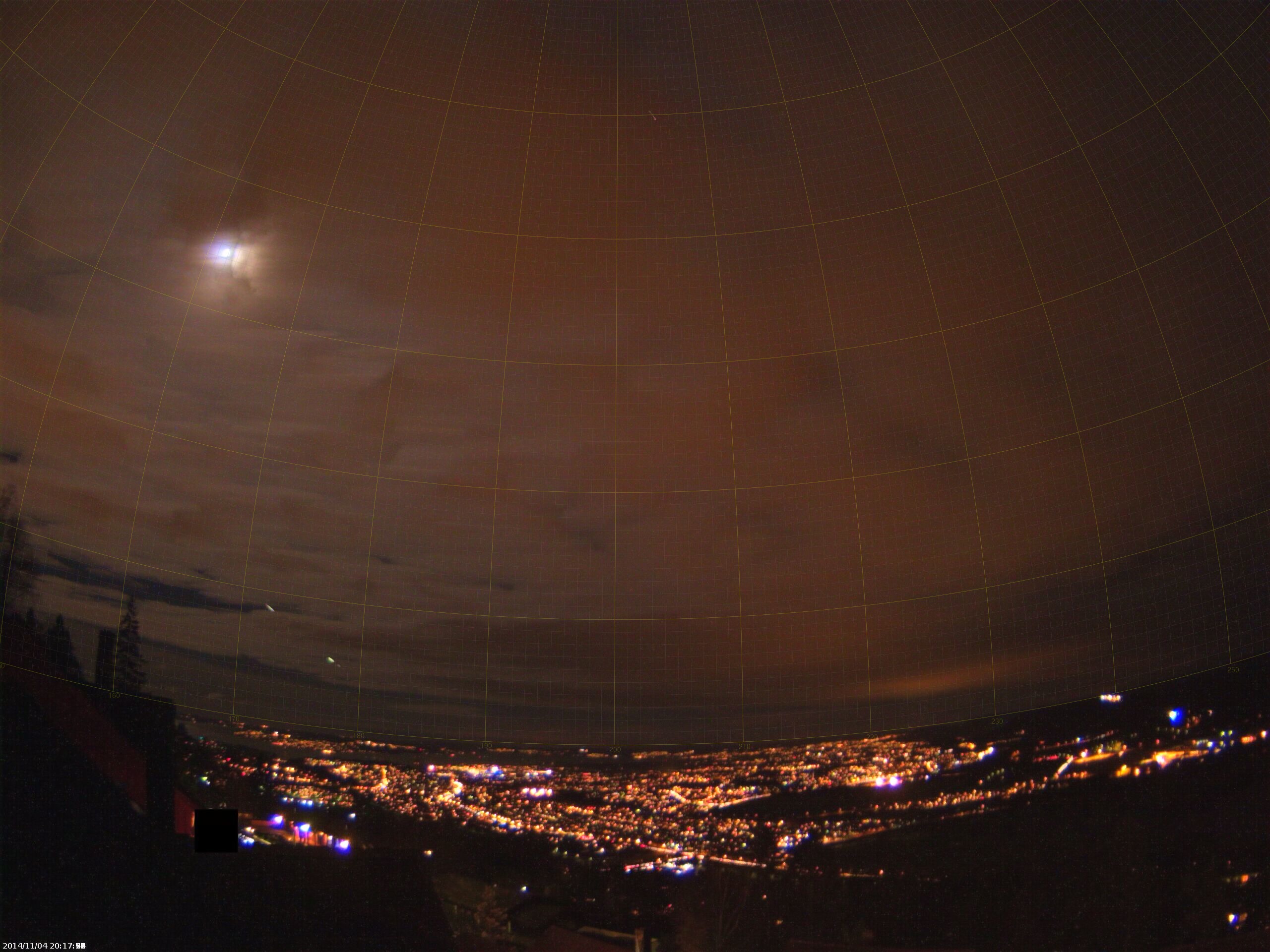
| I photographed two fireballs last night. The second (mostly obscured by clouds) is a Taurid. Taurids are not frequent, but they often produce wonderful fireballs.
Video
NIL DIFFICILE VOLENTI

Edited by midtskogen - Wednesday, 05.11.2014, 09:11 |
| |
| |
| Watsisname | Date: Monday, 24.11.2014, 10:27 | Message # 392 |
 Galaxy Architect
Group: Global Moderators
 United States
Messages: 2613
Status: Offline
| Got a lucky clear sky and so did some more Milky Way photography to work on my post processing techniques. Am liking the result:

Eight 20s shots, same equipment and location as usual.

|
| |
| |
| Fireinthehole | Date: Monday, 24.11.2014, 11:13 | Message # 393 |
 Pioneer
Group: Translators
 Sweden
Messages: 356
Status: Offline
| Watsisname, outstanding shot! 
Love SpaceEngine!
|
| |
| |
| Tofaute3344 | Date: Wednesday, 03.12.2014, 14:15 | Message # 394 |
|
Observer
Group: Newbies
 Germany
Messages: 2
Status: Offline
| Hello Community,
this is my Astrophoto of NGC 6992, a supernova Remnant. I took the Picture trough an 150/750mm Newtonian telescope on an equatorial Mount. The camera i used was an ATIK 383L+ with monochrome sensor. I used a Narrowband Technique with two channels, first was H-alpha (hygrogen light) second was OIII(Oxygen light). to create a colour image i used the Bicolor Technique described by Cannistra.
Hope you like it!
|
| |
| |
| Tofaute3344 | Date: Wednesday, 03.12.2014, 14:23 | Message # 395 |
|
Observer
Group: Newbies
Germany
Messages: 2
Status: Offline
| Hello ,
this is my picture of NGC 6992 a supernova remnant. I used a narrowband technique to combine the cameras data, it is almost the same technique as hubble uses. The camera was an ATIK 383L+ with monochrome sensor. Overall exposure time about 6-7 hours, in subframes to 10 minutes each. telescope was an 150/750 newtonian telescope on an equatorial mount.
Hope you like it
|
| |
| |
| Rhysy27 | Date: Wednesday, 03.12.2014, 15:55 | Message # 396 |
 Space Tourist
Group: Users
 United Kingdom
Messages: 31
Status: Offline
| Down here in Cornwall there is an old, abandoned airfield that was once used during WW2. Lots of old buildings scattered around as well as great views of the night sky!
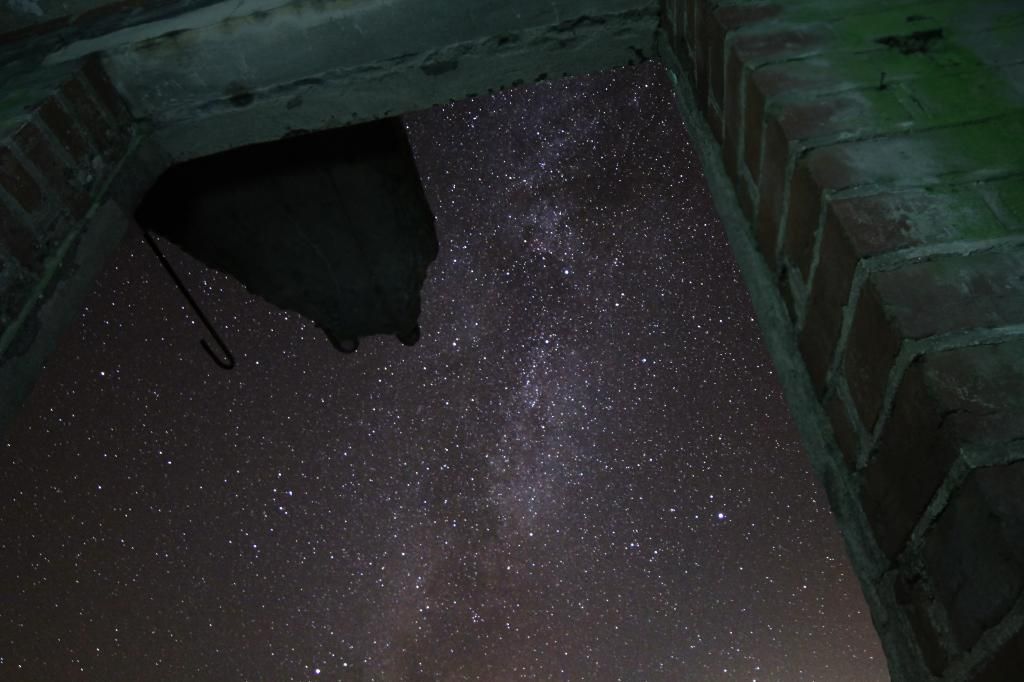
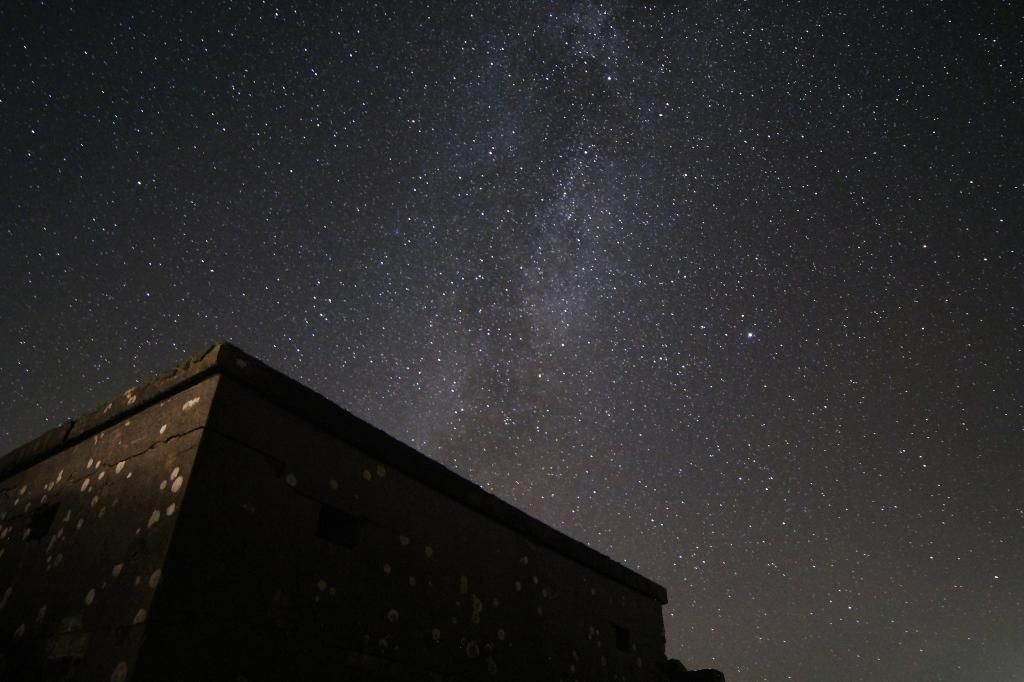
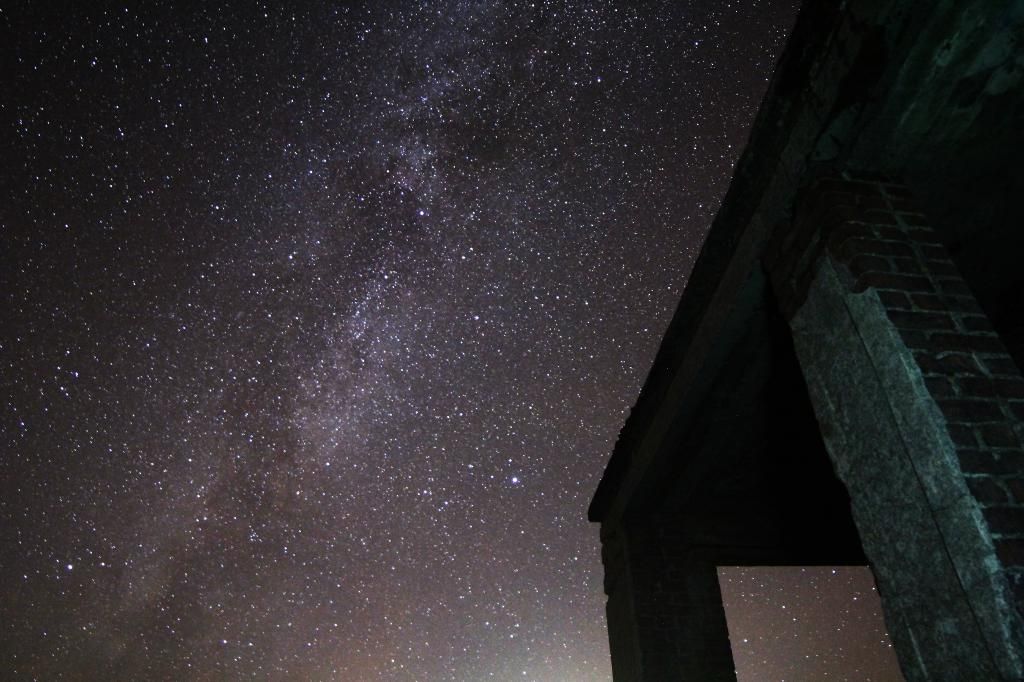
"It is far better to grasp the universe as it really is than to persist in delusion, however satisfying and reassuring." - Carl Sagan
|
| |
| |
| Fireinthehole | Date: Wednesday, 03.12.2014, 19:47 | Message # 397 |
|
Pioneer
Group: Translators
Sweden
Messages: 356
Status: Offline
| Quote Rhysy27 (  ) Down here in Cornwall there is an old, abandoned airfield that was once used during WW2. Lots of old buildings scattered around as well as great views of the night sky!
Incredible shots! I myself lived near an old WWII airfield. Stargazing from there was simply perfect, since there were no trees and the nearest city was many kilometres away.
Love SpaceEngine!
|
| |
| |
| midtskogen | Date: Wednesday, 03.12.2014, 19:49 | Message # 398 |
|
Star Engineer
Group: Users
Norway
Messages: 1674
Status: Offline
| Wow! Did you have to do any processing to get rid of the light pollution?
NIL DIFFICILE VOLENTI
|
| |
| |
| Rhysy27 | Date: Wednesday, 03.12.2014, 22:02 | Message # 399 |
|
Space Tourist
Group: Users
United Kingdom
Messages: 31
Status: Offline
| Quote Fireinthehole ( ) Incredible shots! I myself lived near an old WWII airfield. Stargazing from there was simply perfect, since there were no trees and the nearest city was many kilometres away.
That sounds quite good to shoot from! There are 1 or 2 towns near this one though they don't pose any threat of light pollution. The only negative thing is that there is a dairy farm (can just see the glow at the bottom of the last picture) next to the entrance that has lights constantly on 
Quote midtskogen ( ) Wow! Did you have to do any processing to get rid of the light pollution?
The only processing I did was minor things such as playing around with the brightness and contrast. I think I tried touching up on the white balance a little bit too.
"It is far better to grasp the universe as it really is than to persist in delusion, however satisfying and reassuring." - Carl Sagan
|
| |
| |
| midtskogen | Date: Monday, 08.12.2014, 05:59 | Message # 400 |
|
Star Engineer
Group: Users
Norway
Messages: 1674
Status: Offline
| A nice meteor this morning:
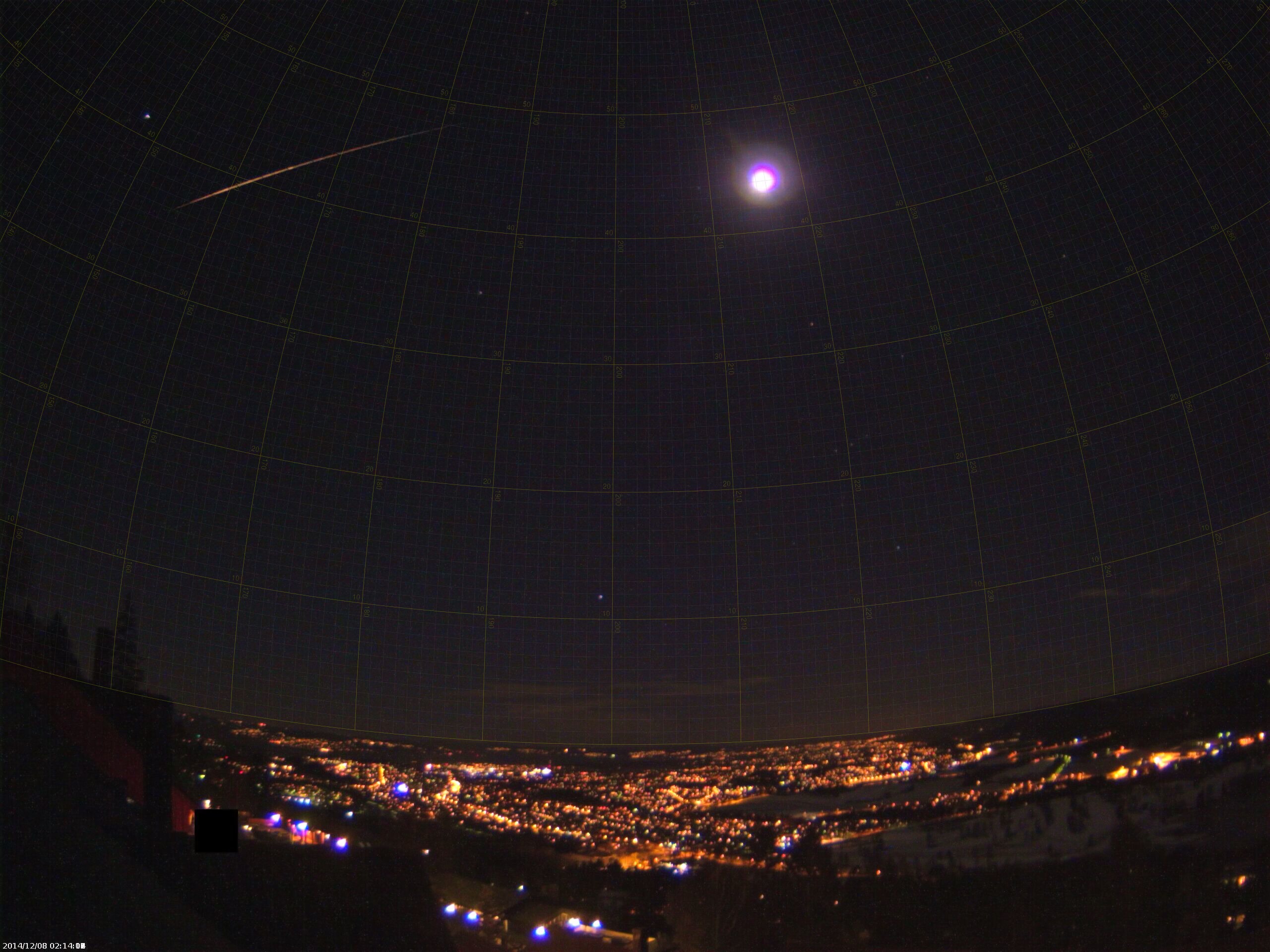
Meteor 2014-12-08 02:14:16UTC
NIL DIFFICILE VOLENTI
|
| |
| |
| Watsisname | Date: Monday, 08.12.2014, 10:03 | Message # 401 |
|
Galaxy Architect
Group: Global Moderators
United States
Messages: 2613
Status: Offline
| Very nice (and the earlier ones, too). By the way, I was wondering how do these events play into your meteor monitoring network. (Did any other cameras capture these events as well, and do they have your improved coordinate mapping? Or is that still work in progress?) Even if clearly not a stone dropping event, it'd be great to trace trajectories.
|
| |
| |
| midtskogen | Date: Monday, 08.12.2014, 18:45 | Message # 402 |
|
Star Engineer
Group: Users
Norway
Messages: 1674
Status: Offline
| That meteor was observed by one other camera, about 40 south of me:
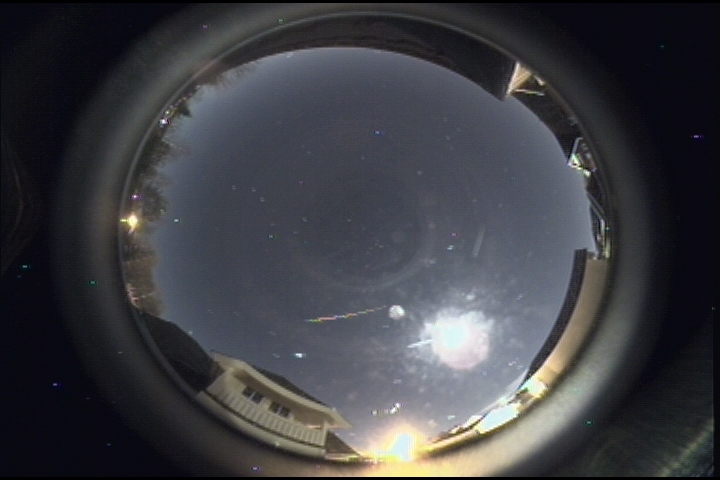
(Credit: Arne Danielsen)
There isn't really a proper network, just some scattered cameras and little automation. I.e. we have to exchange pictures by e-mail. And coordinates have to be looked up manually. As can be seen in the allsky image, the resolution is very low. I haven't had time measure az/alt for it, the closest reference is Jupiter, and the accuracy will be hardly better than a couple of degrees. I haven't time to figure out the coordinates right now.
By this time next year we hopefully have several cameras like mine, and coordinate mappings are found automatically and a preliminary trajectory would be computed within a few minutes of the event. Interesting events would of course be checked manually to improve accuracy, and we would still have to get weather information manually and then run dark flight simulations.
I now have three 5MP cameras in operation which cover nearly all of my visible sky (4 cameras are required to cover the entire sky if you have a perfect horizon). These are expensive (nearly $1000 each including heated housing), so it's a good thing that we can go from no money (e.g. own pockets) to an actual budget.
NIL DIFFICILE VOLENTI
|
| |
| |
| FastFourierTransform | Date: Monday, 08.12.2014, 20:33 | Message # 403 |
 Pioneer
Group: Local Moderators
 Spain
Spain
Messages: 542
Status: Offline
| I think this is wonderfull project that you are improving inmensly. Great job!!!
With that network of cameras you could triangulate de hight of the object and the speed vector, permiting you to find this cosmic gifts all around your region
Awesome. Truly awesome!
|
| |
| |
| midtskogen | Date: Tuesday, 09.12.2014, 21:39 | Message # 404 |
|
Star Engineer
Group: Users
Norway
Messages: 1674
Status: Offline
| Another nice meteor last night (visible for 3.2 seconds).
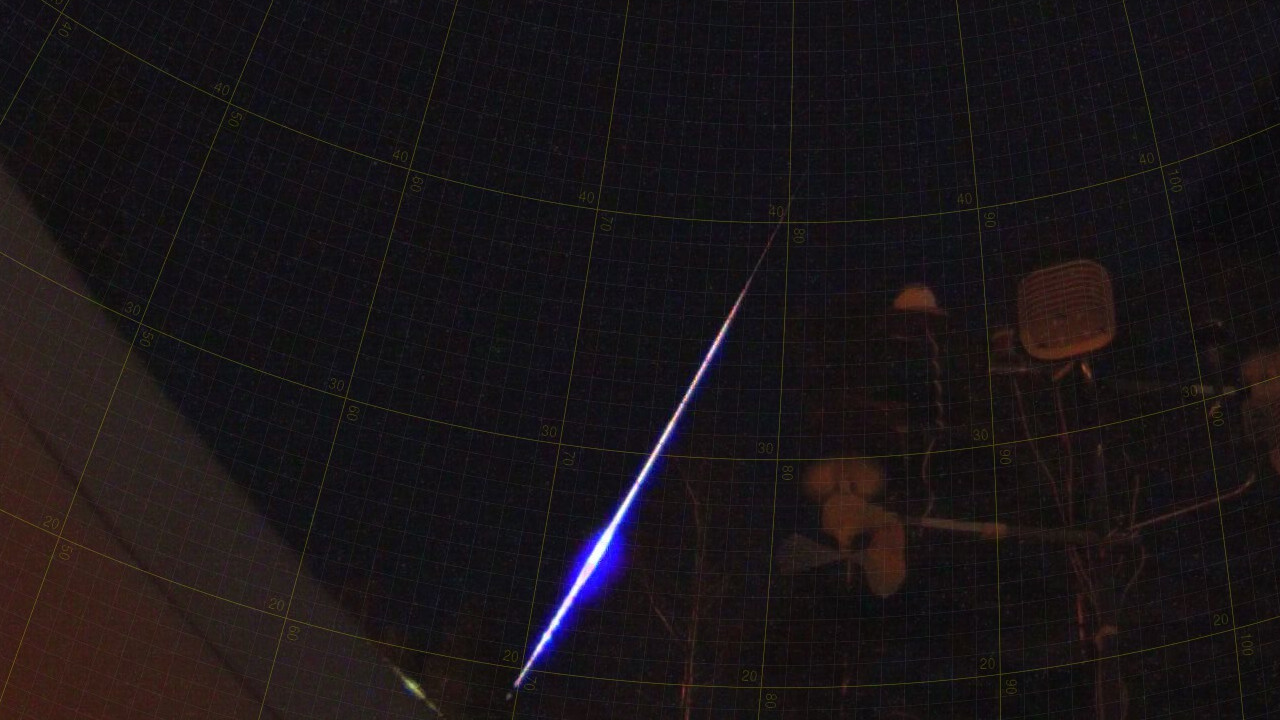 Added (09.12.2014, 20:39)
---------------------------------------------
Quote Watsisname ( ) Did any other cameras capture these events as well
I got this solution:
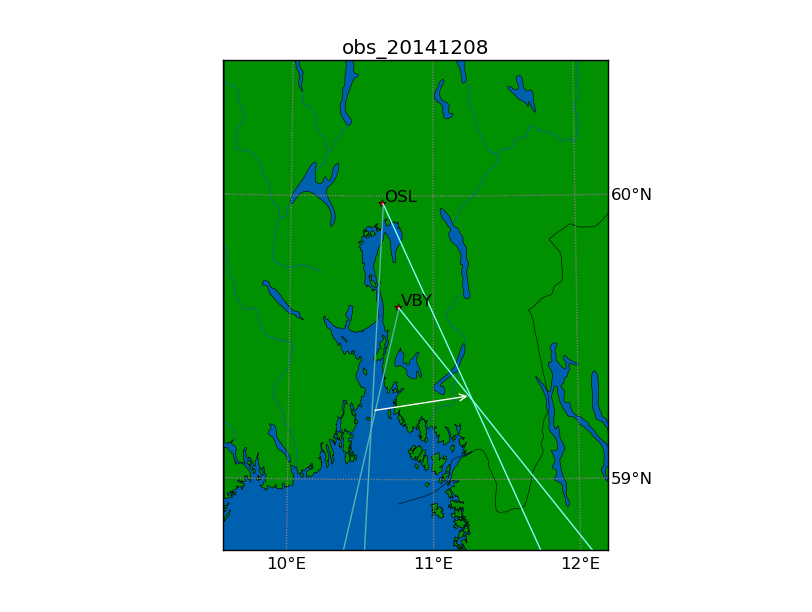
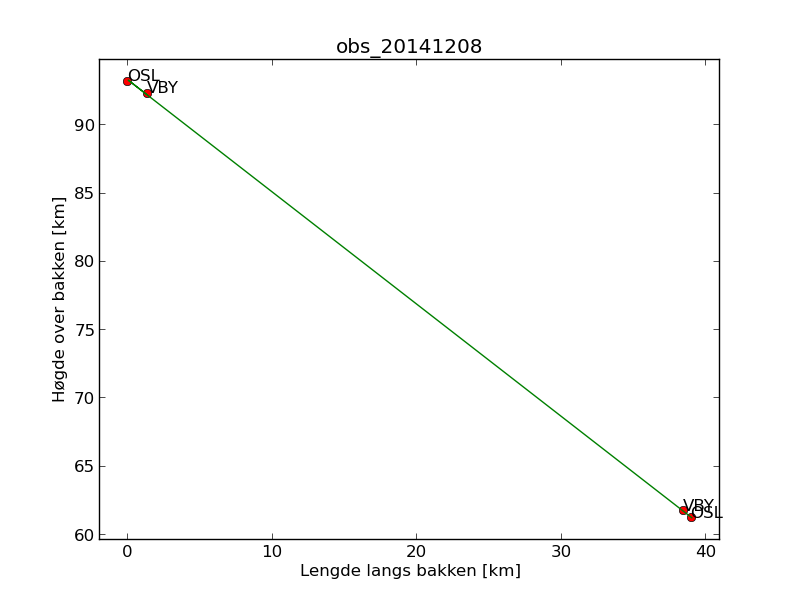
No meteorites dropped from that one.
I also made a video of the meteors of the last two nights. It's in 5 frames per second. The cameras support 10 frames per second, but I'm not yet able to process that realtime currently, so it's set to 5 for the time being.
NIL DIFFICILE VOLENTI
Edited by midtskogen - Tuesday, 09.12.2014, 14:52 |
| |
| |
| Watsisname | Date: Tuesday, 09.12.2014, 22:47 | Message # 405 |
|
Galaxy Architect
Group: Global Moderators
United States
Messages: 2613
Status: Offline
| Great stuff! The video of last night's meteor is spectacular. And if I'm interpreting your plot right, then its speed was about 20km/s?
I imagine it would be a stupendous amount of work, but it'd be awesome to be able to back-trace these trajectories to find the initial orbital path of these, like NASA's automated plots seen on Spaceweather. Probably only worthwhile for the dropped stones, in case a find can be tied to a parent asteroid.
edit: 15, not 20.
Edited by Watsisname - Tuesday, 09.12.2014, 22:50 |
| |
| |
 ENG
ENG New site


 Norway


 United States
 Sweden
 Germany
  United Kingdom


 Spain
Spain